I wept at the tomb of my mother's tongue
Adrienne Greenblatt
January 8th — February 15th, 2026
Press Release
I wept at the tomb of my mother's tongue Checklist

This is sculptor, musician, and conceptual artist, Adrienne Greenblatt's first solo exhibition with the gallery. This exhibition is an offering, an investigation of the impact of violence, both personal and systemic, and a remaking of Greenblatt's relationship to their origins in El Salvador, Texas, and New York. The artist makes use of their active relationship with the dead, of lore to reconsider violence's potential for revenge, revolution, and restitution. I wept at the tomb of my mother's tongue is Greenblatt's effort to process their frustration towards their ancestors while reestablishing their connection to the many tendrils of their lineage.
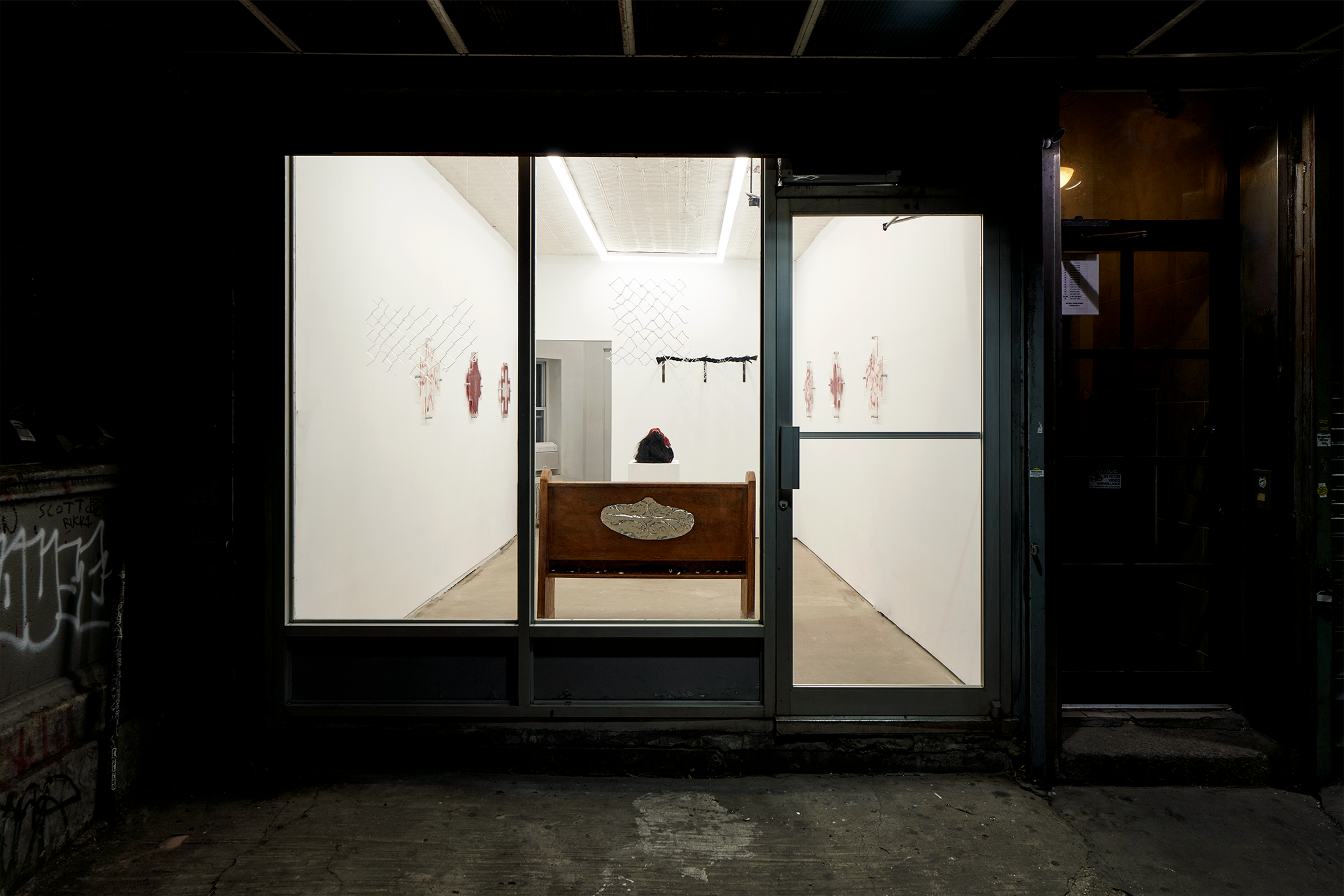
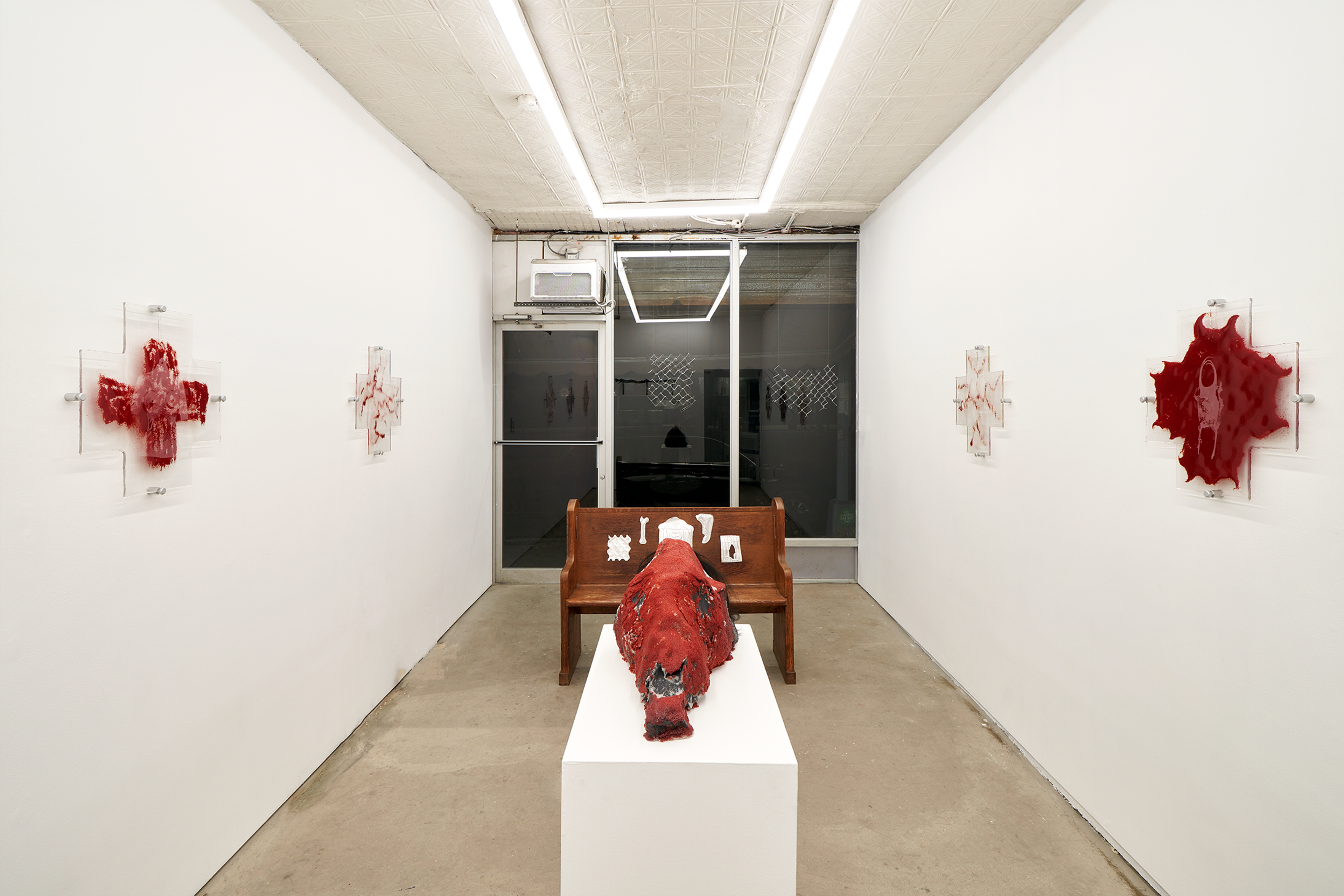
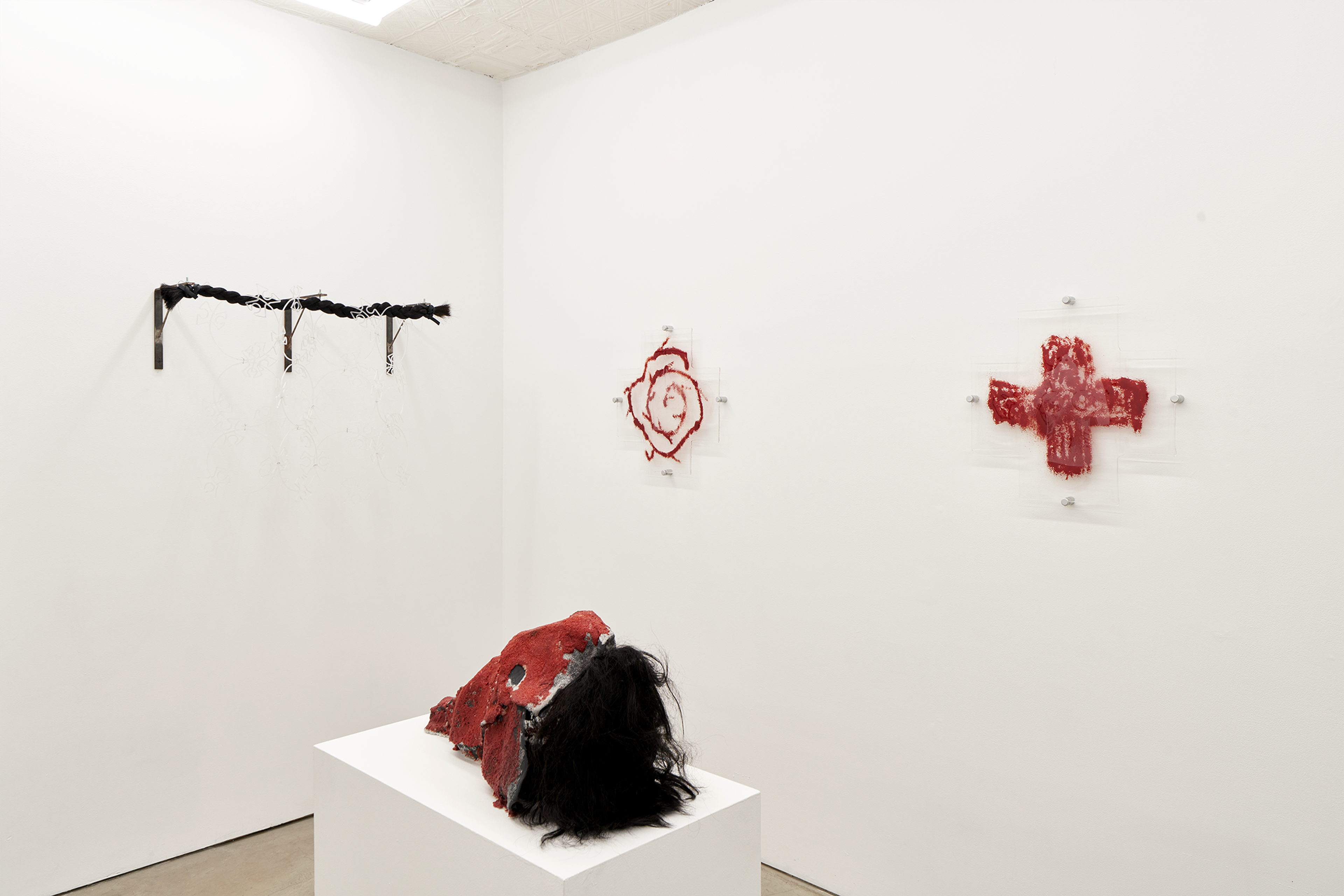
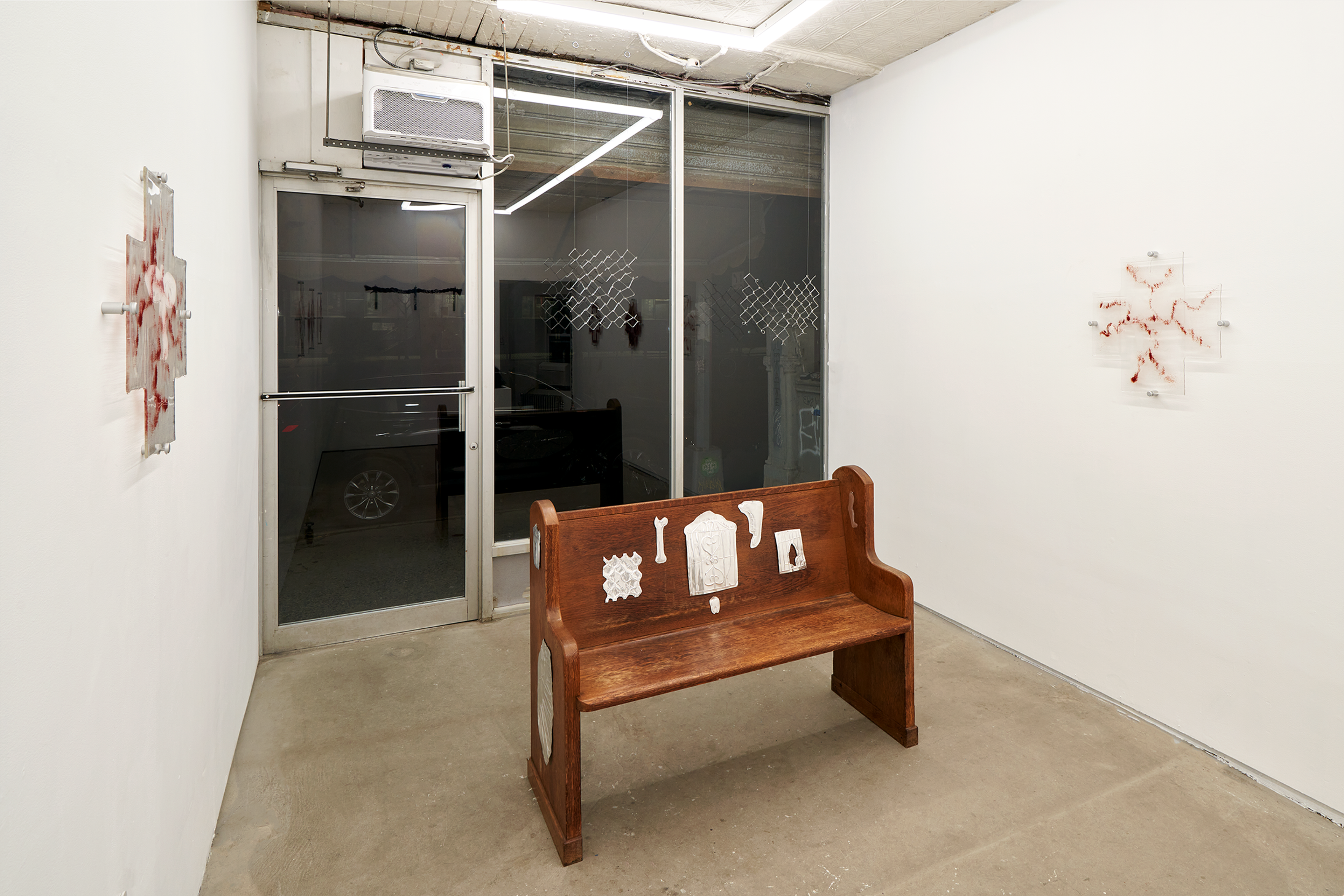
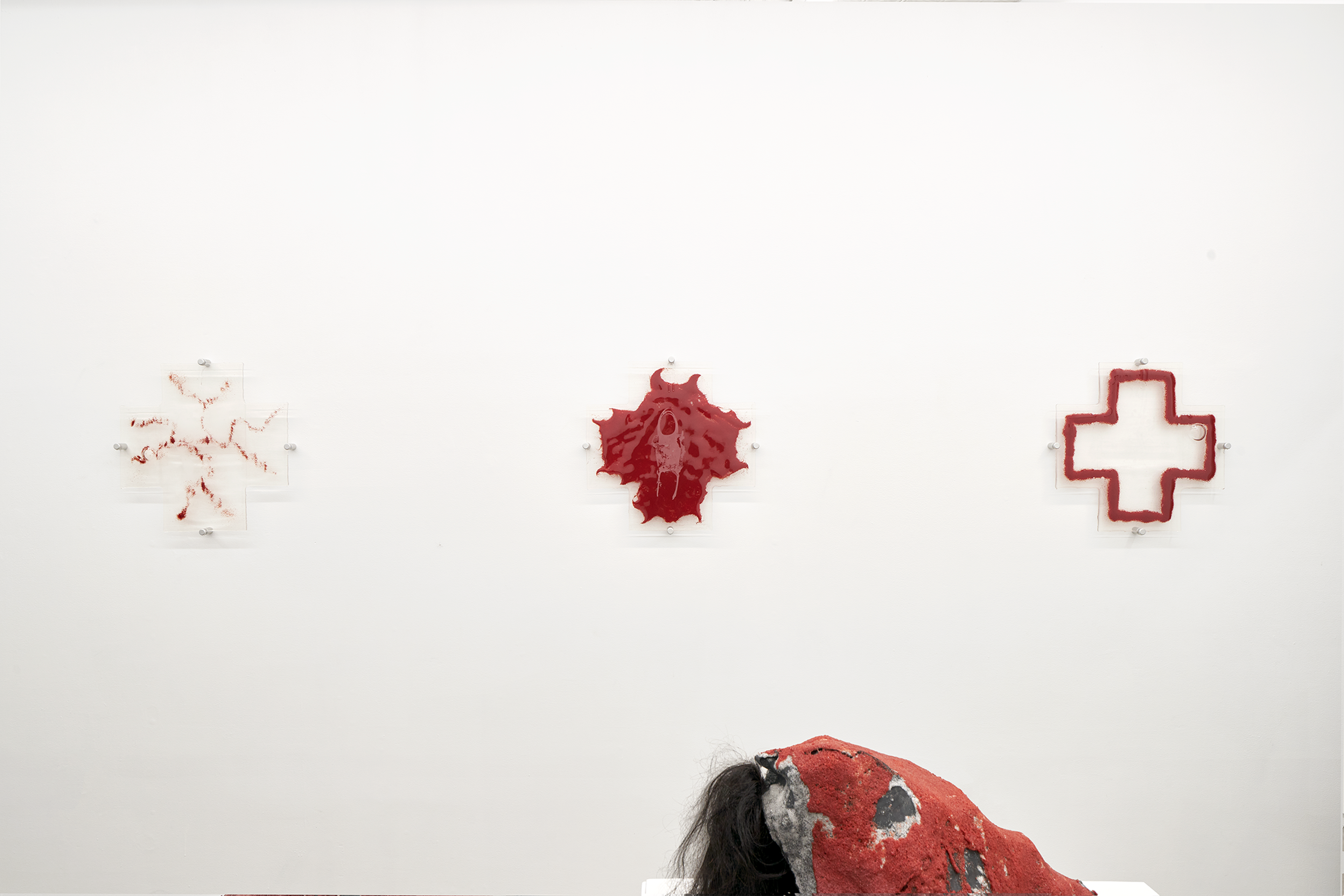
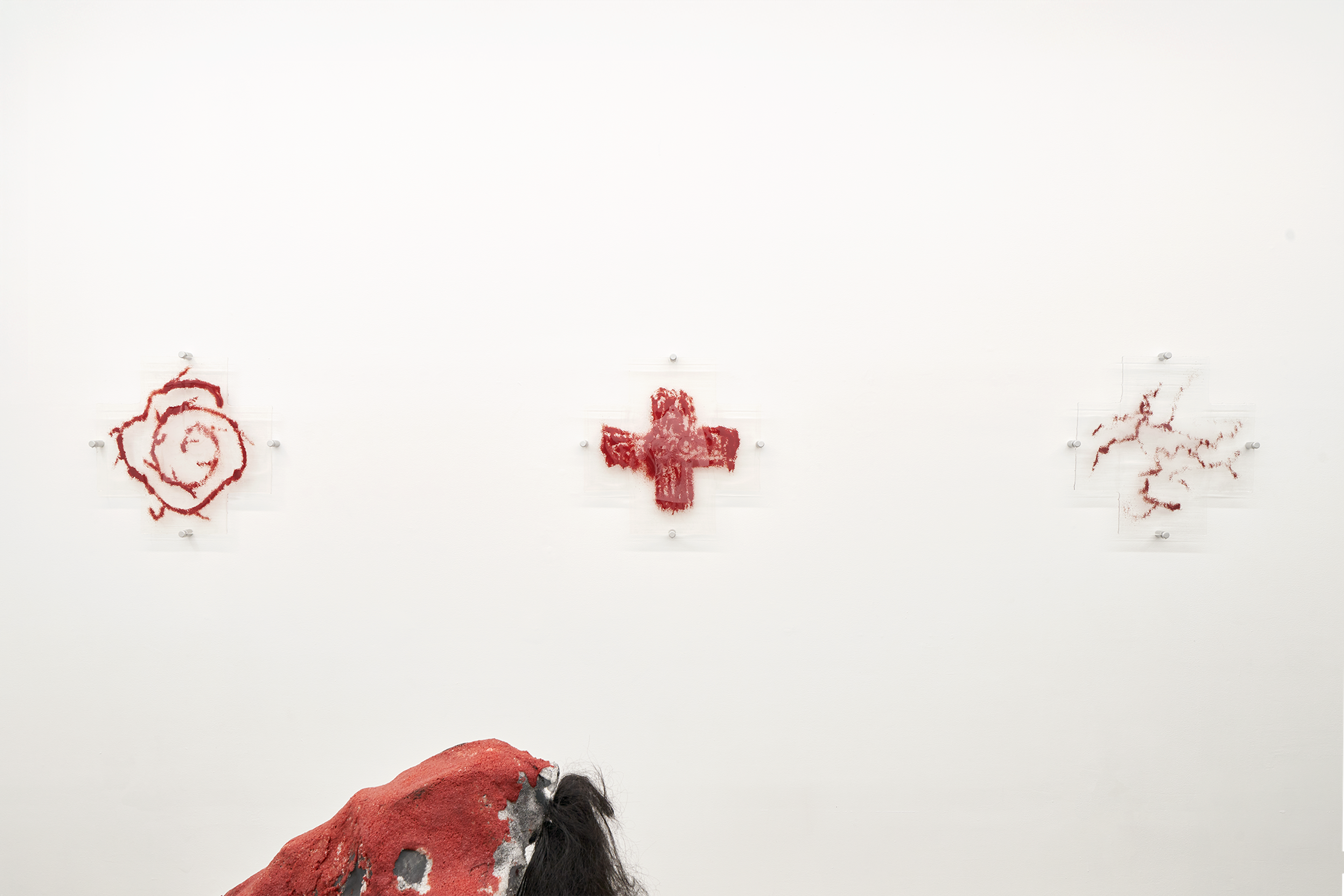
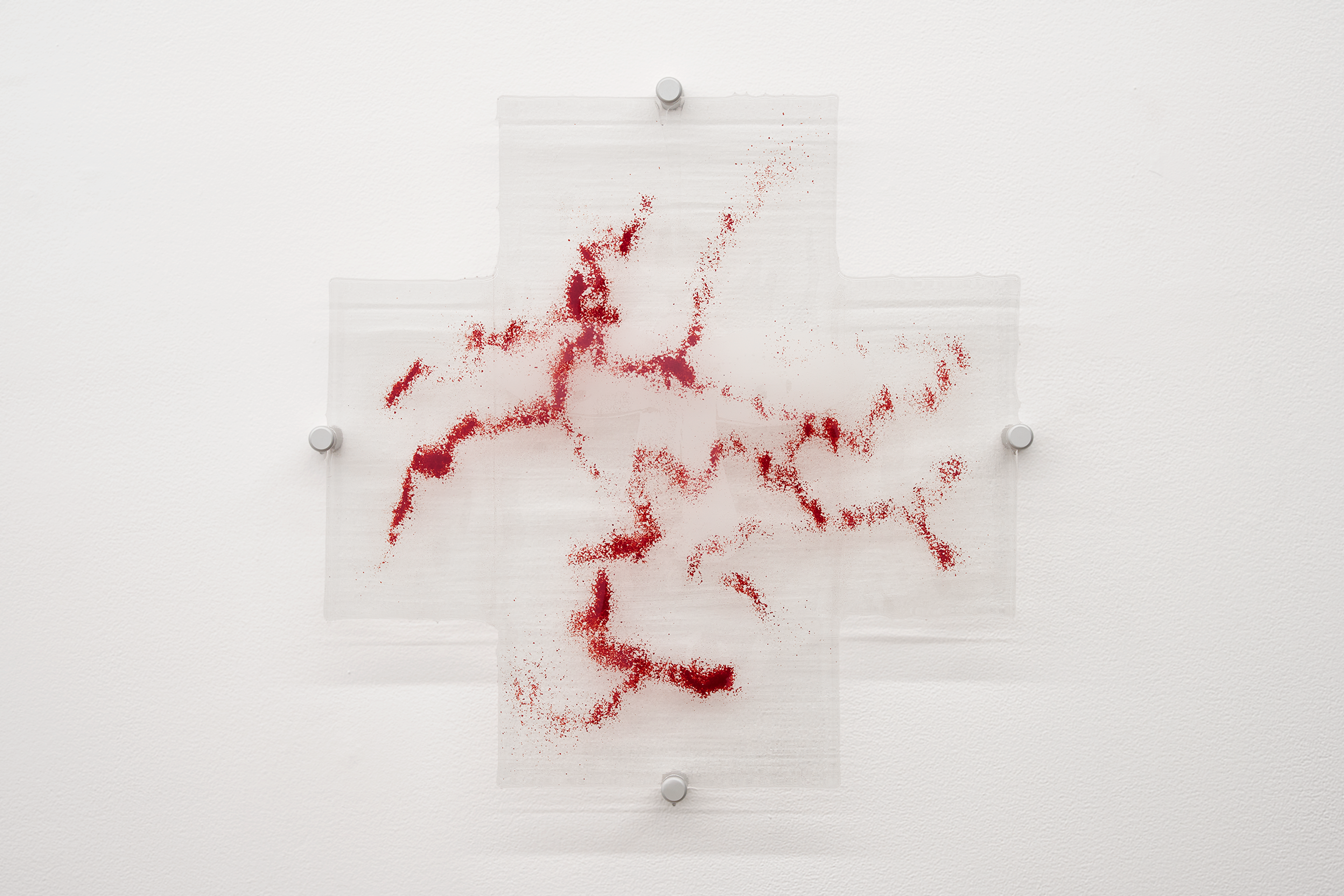
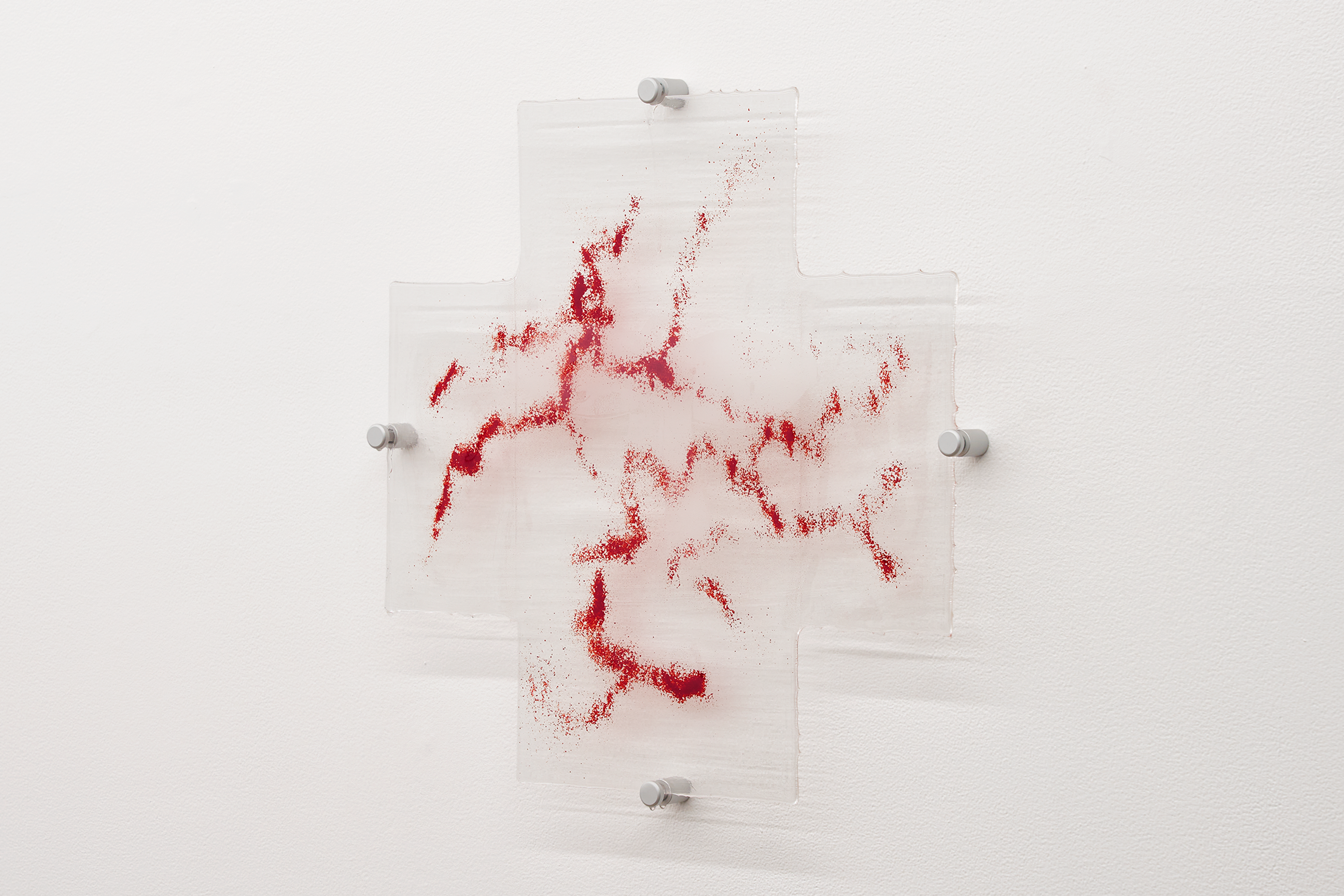
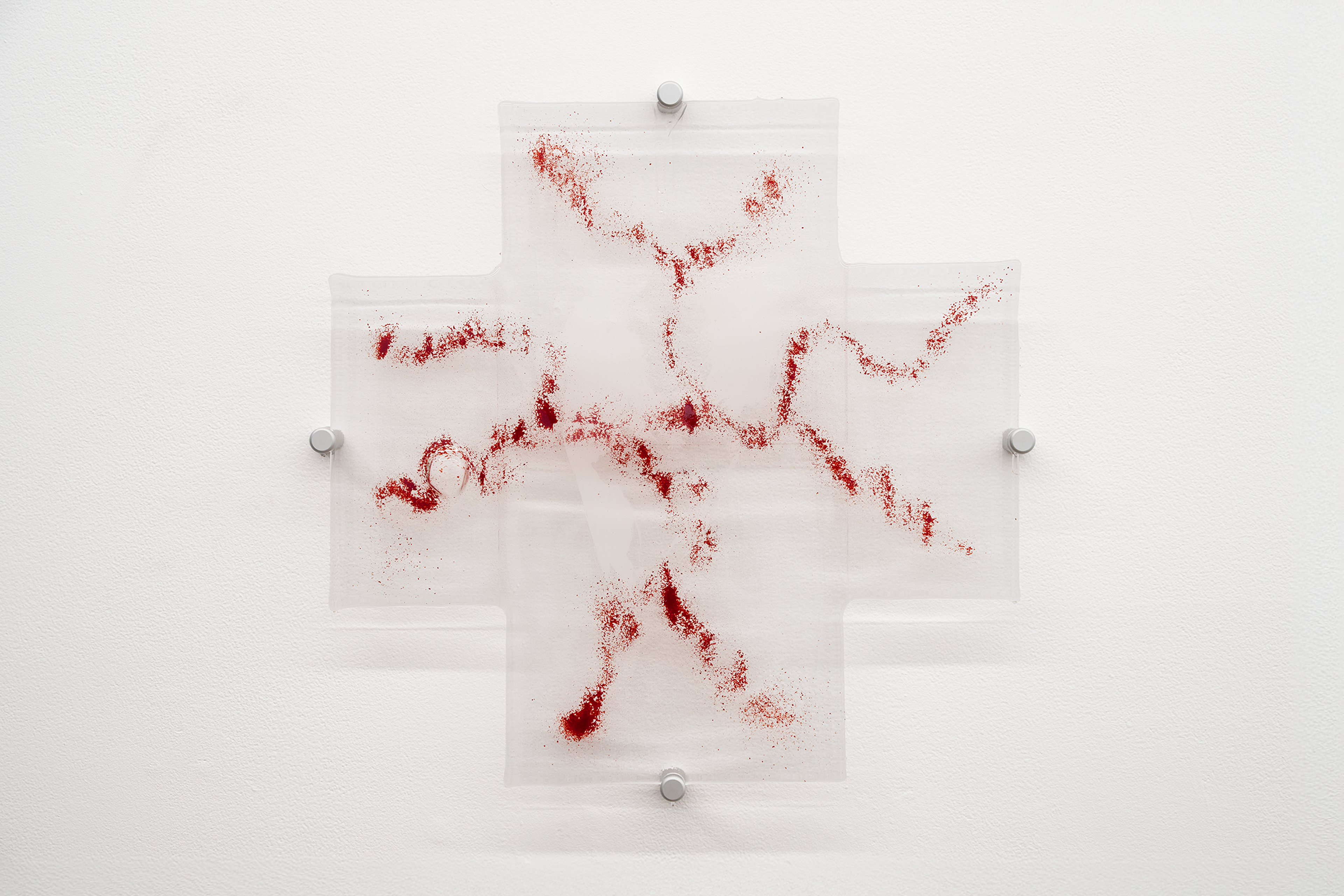
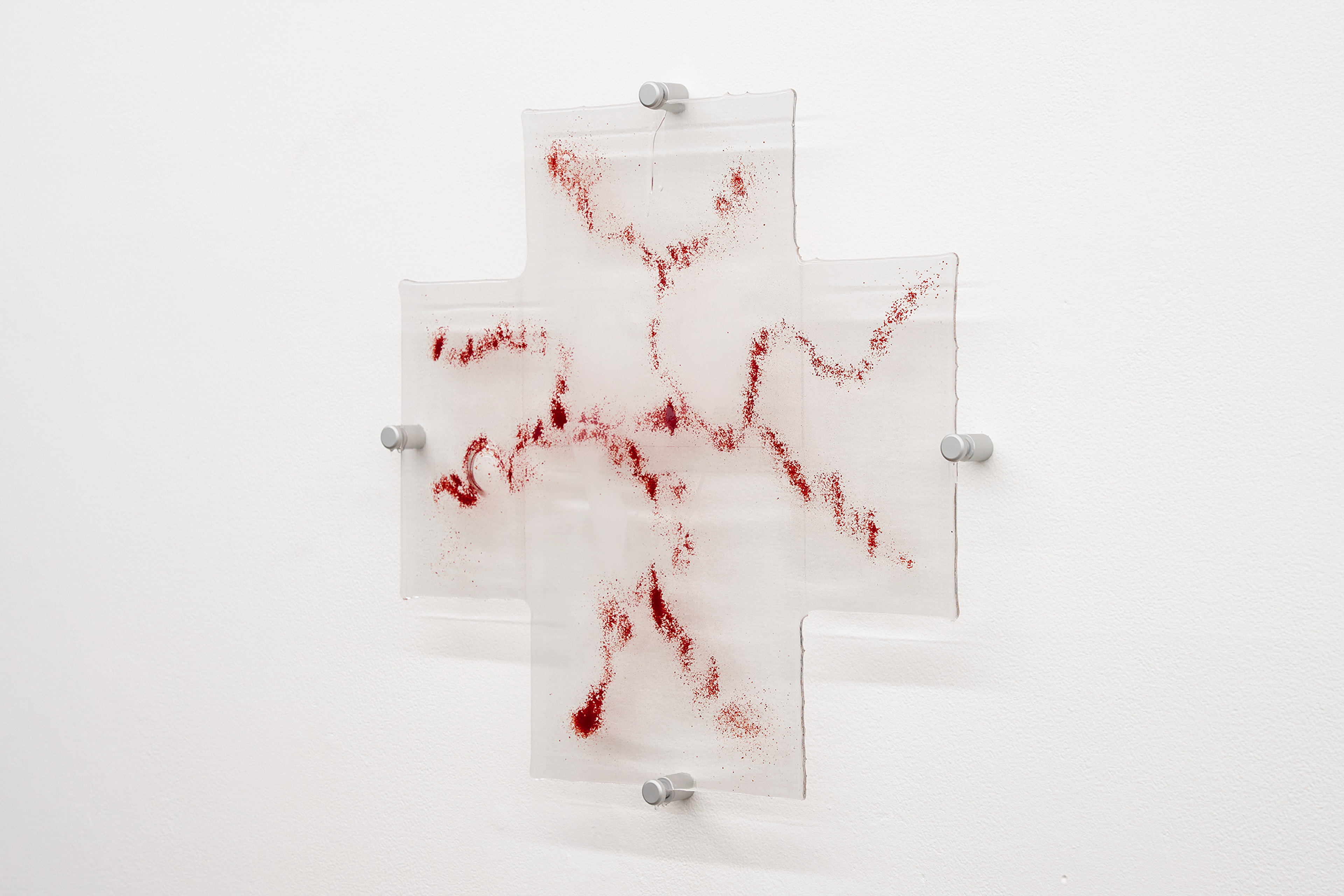
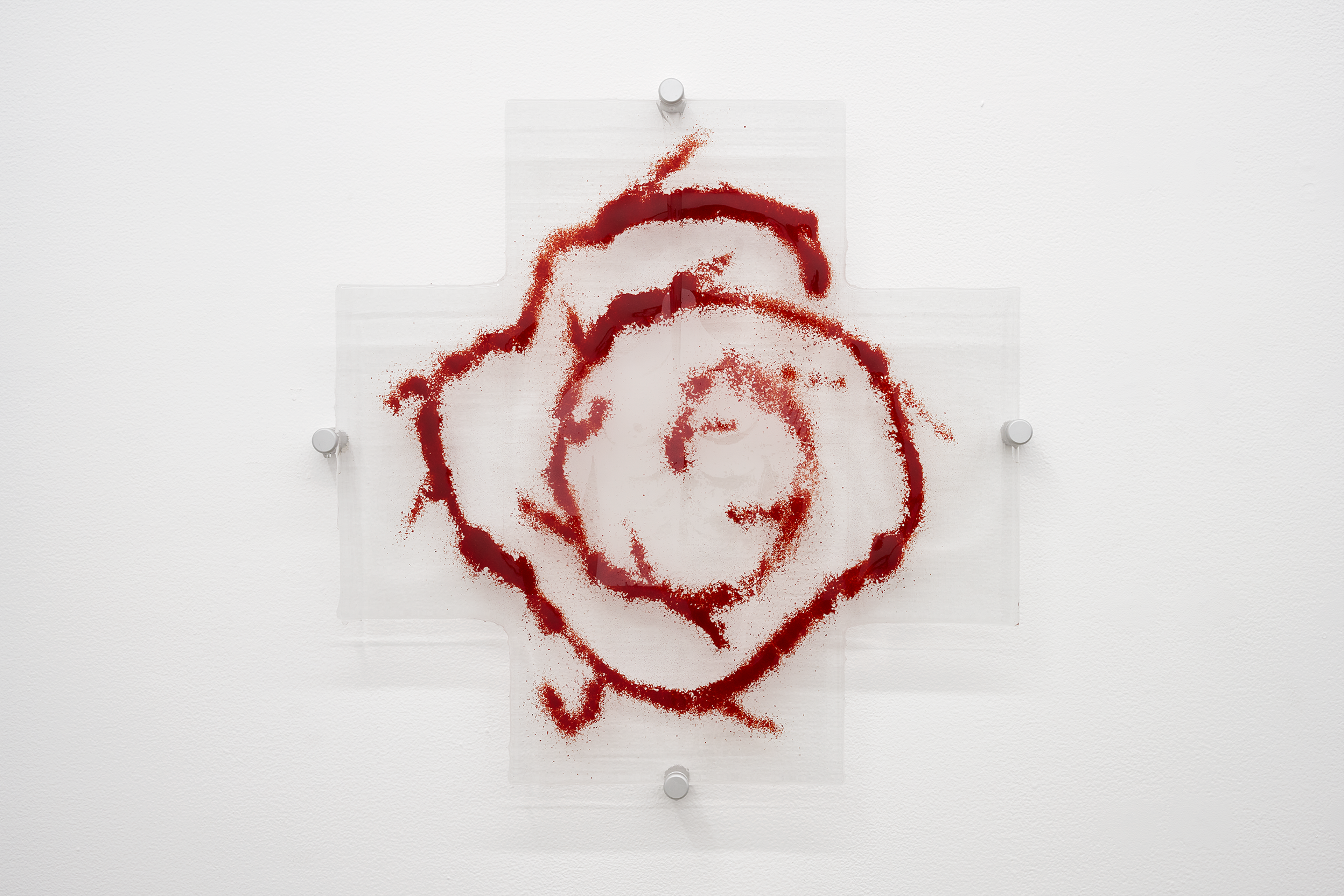
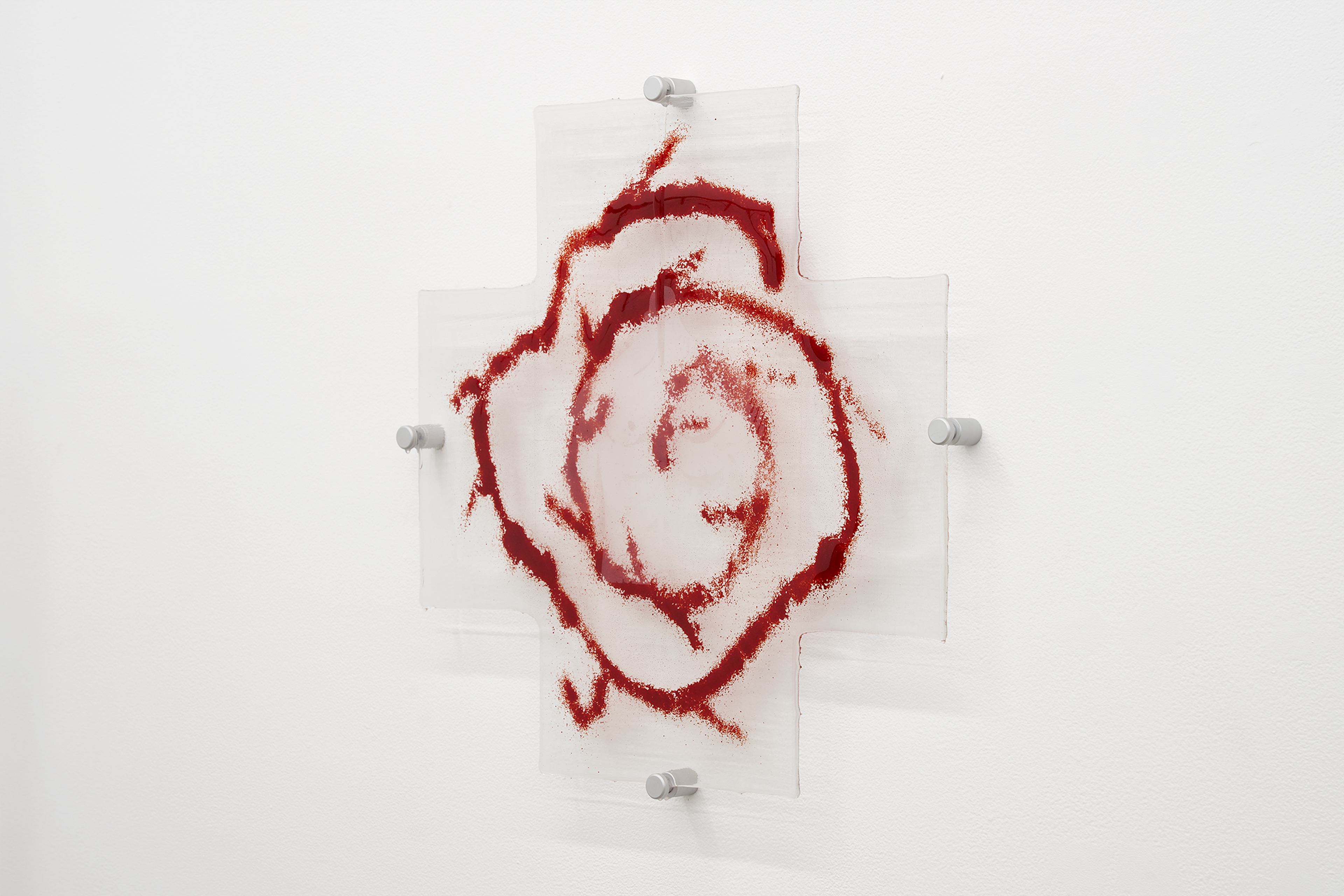
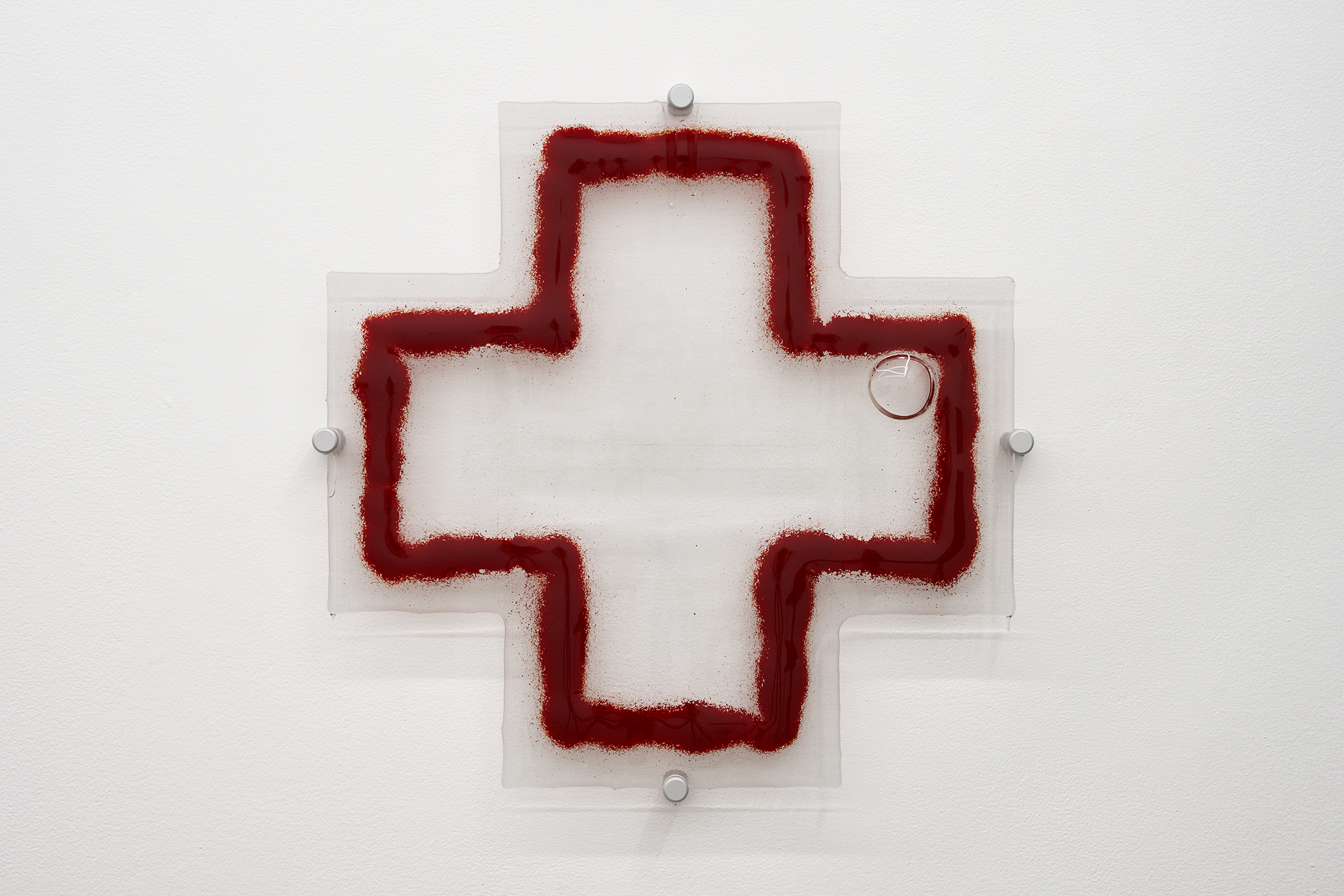
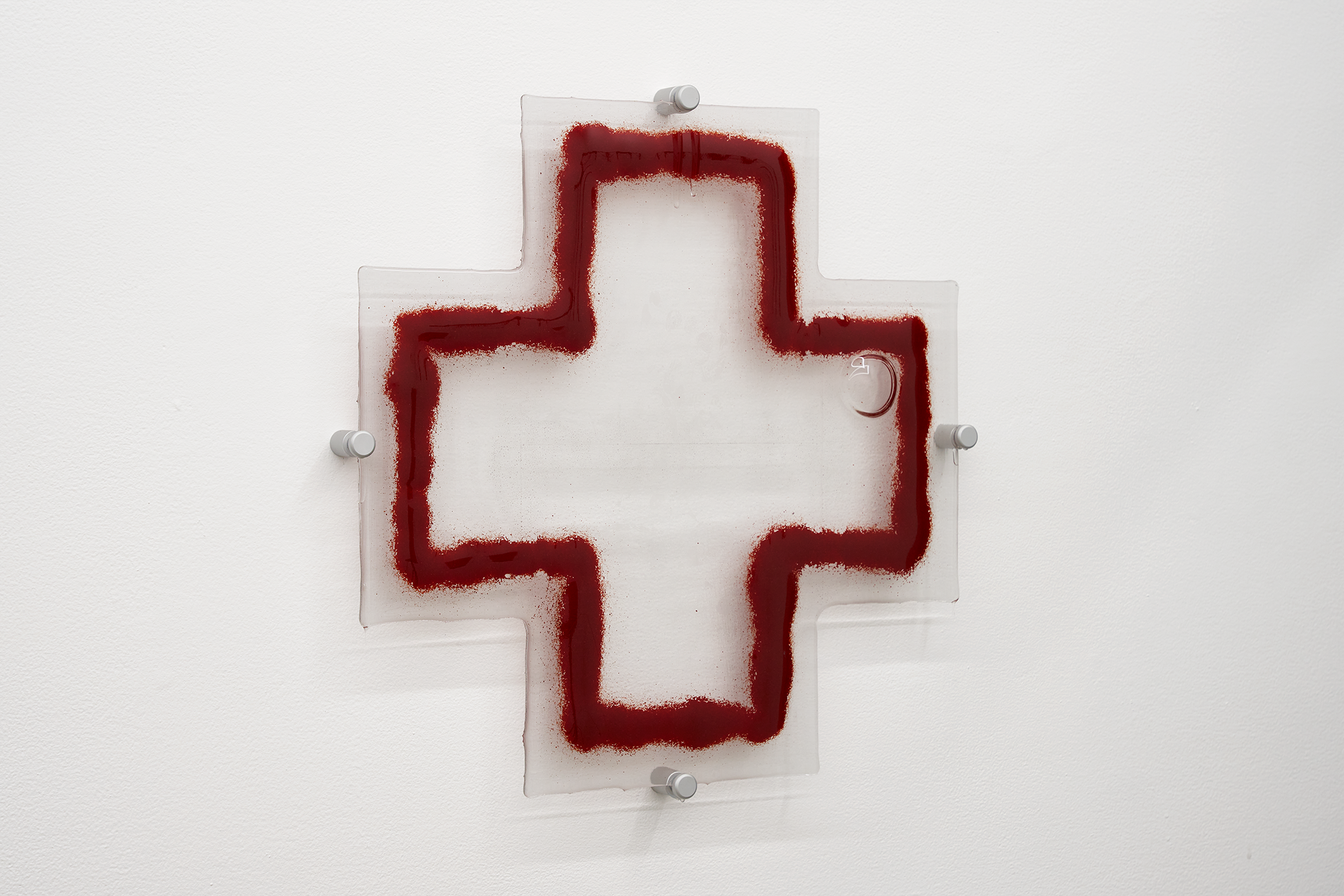
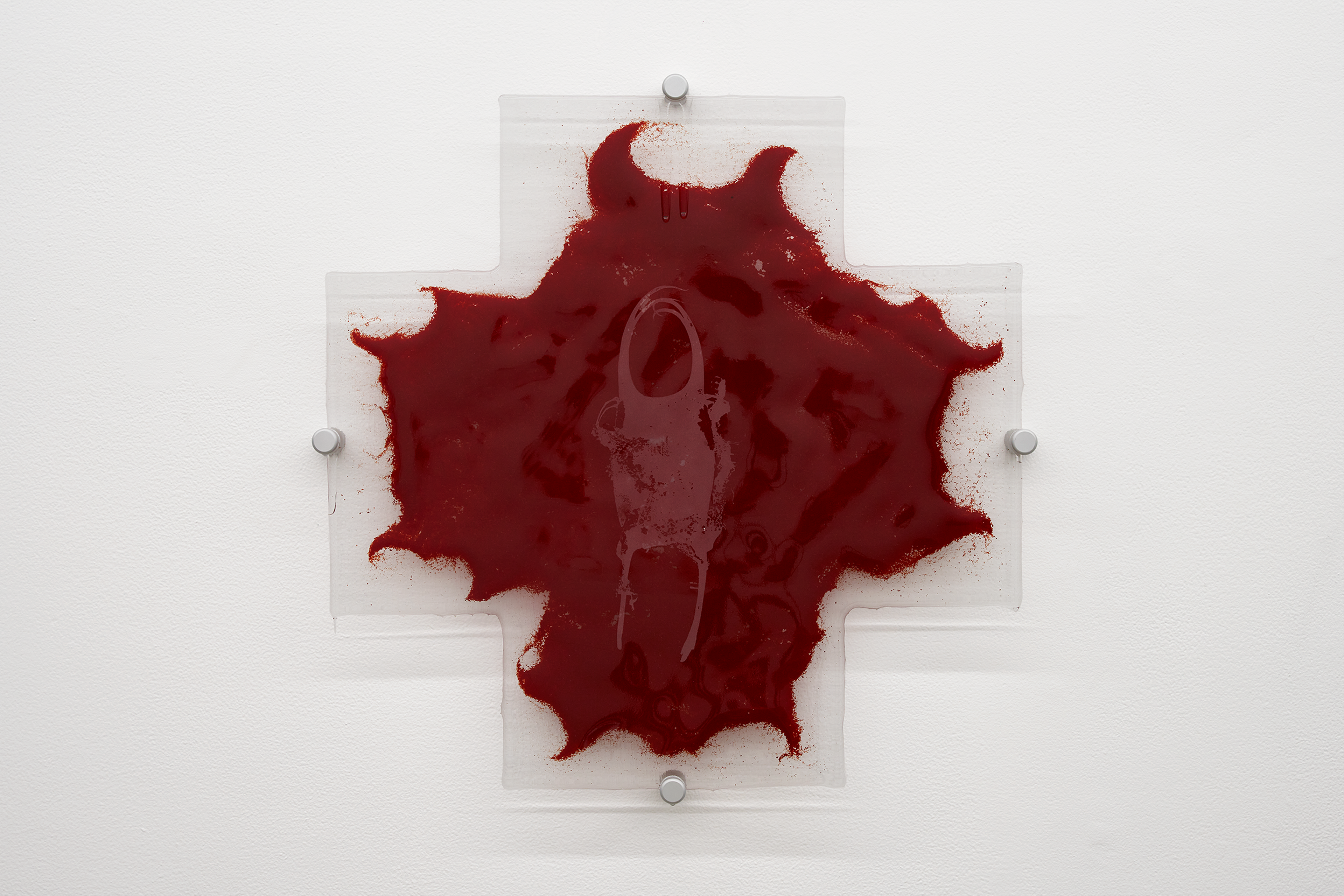
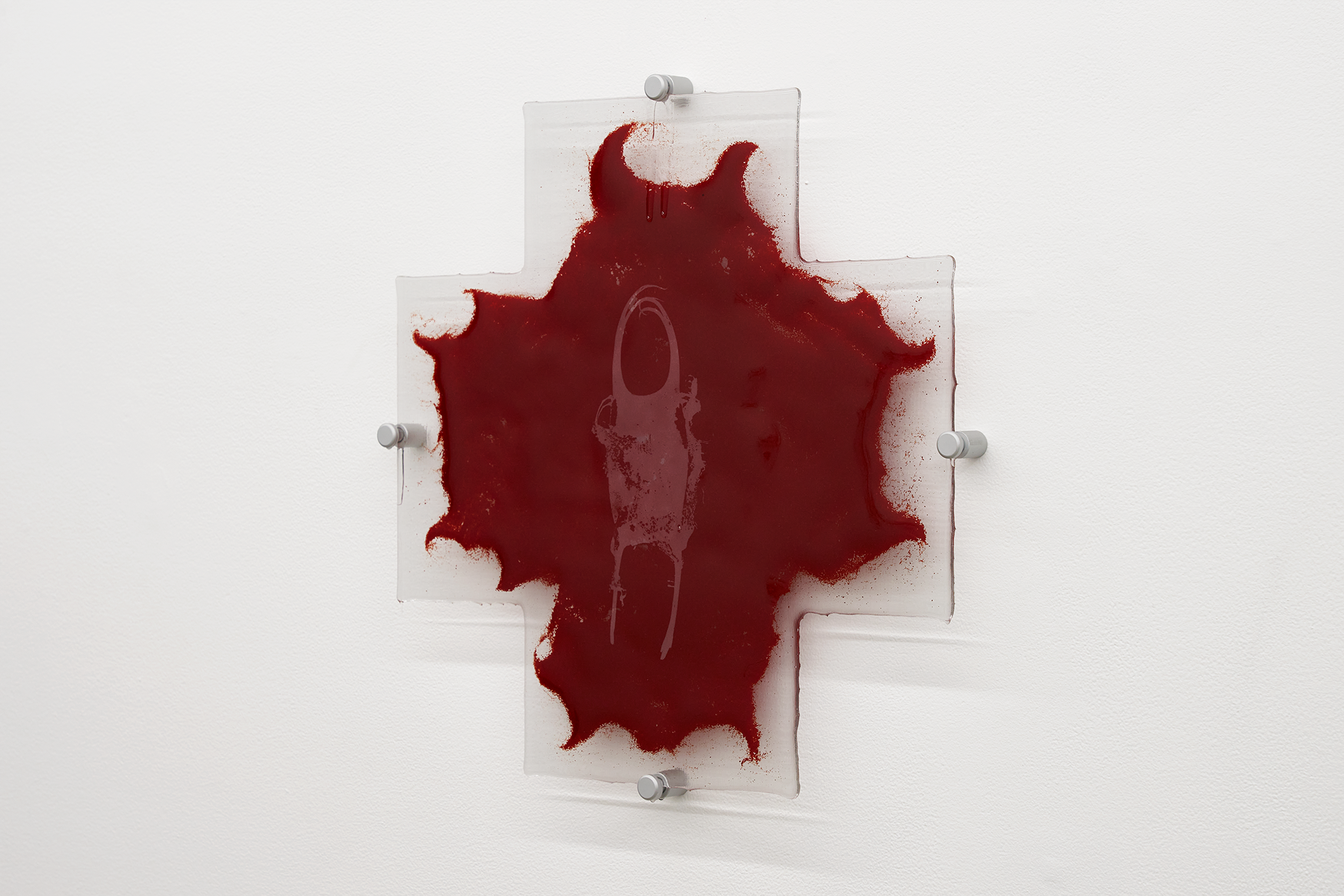
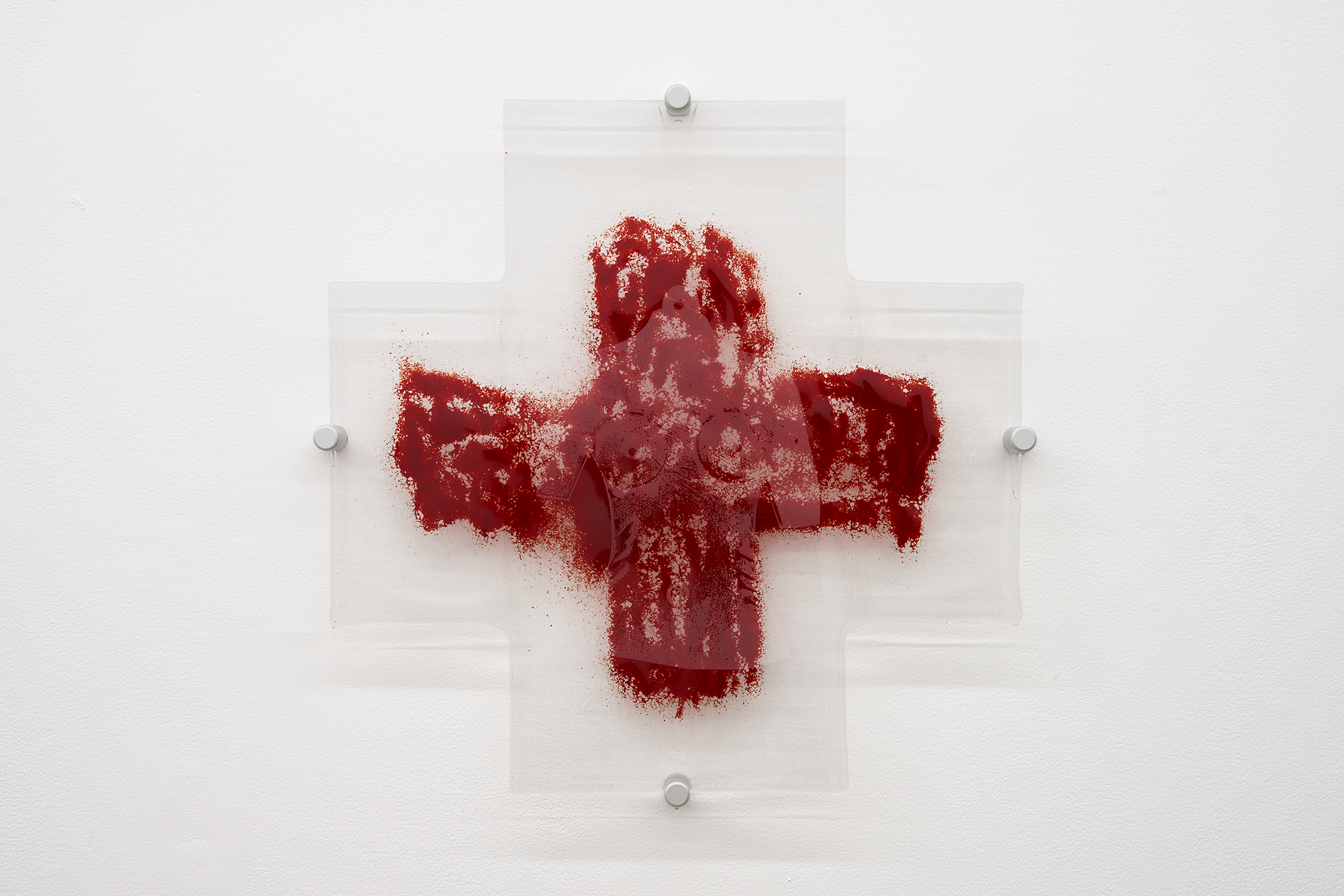
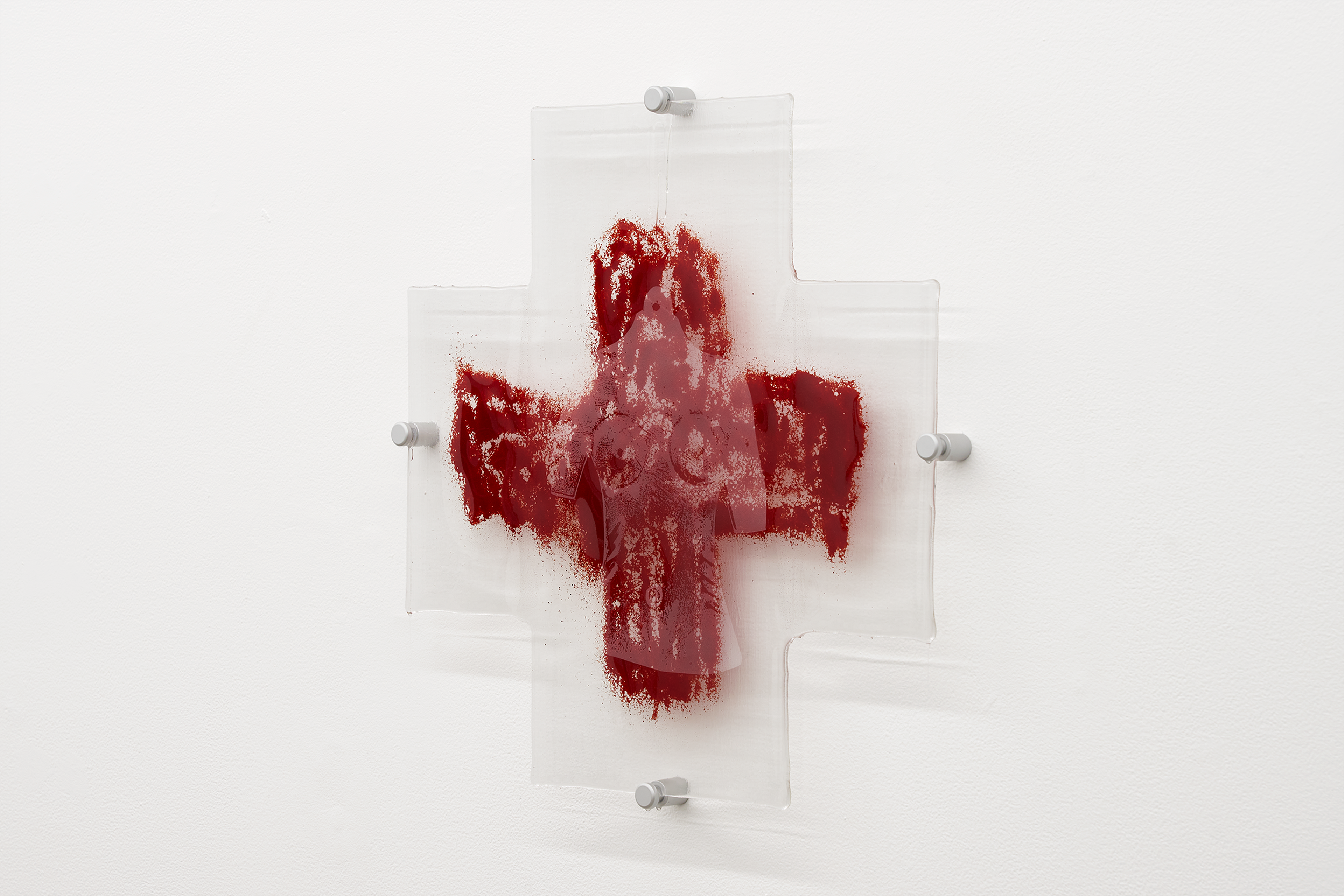
Greenblatt exhumes characters from Salvadoran fables and iconography from their prophetic dreams to explore a collective consciousness that has formed somewhere between the state, its formalized religion, and animism. They are addressing the folk Catholicism that has grown and adapted alongside Salvadoran spiritual practices. Suspended in kiln-formed glass, the panels along the wall depict crosses scattered with red glass frit. The cross’s meaning is dependent on personal context: it can be understood as Catholic, medical, or as Yaxche from the Popol Vuh. The artist regards the cross as a symbol of equity: an image of balance that distills many perspectives into one simple shape. Layered in ghostly sandblast are ex voto—offerings made in gratitude, devotion, or fulfillment of a vow—in the forms of a “male” torso, a “female” torso, eyes with a nose, and animal remains found by the artist in New York City. Their corpses stand in for the rejection of the “primitive isolate,” a racist concept that purity exists in an original form, instead implying the importance of evolution, change, and transformation.
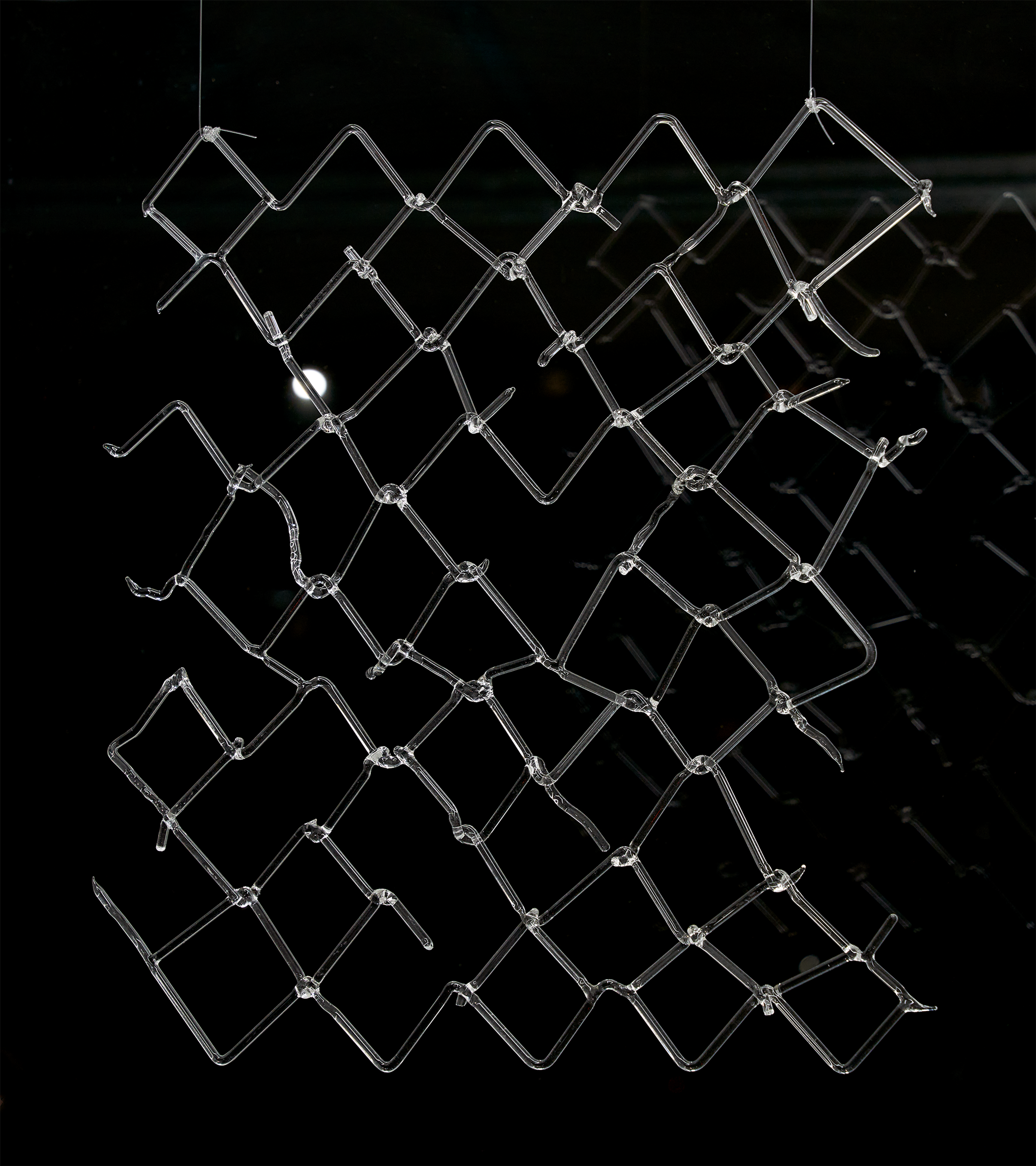
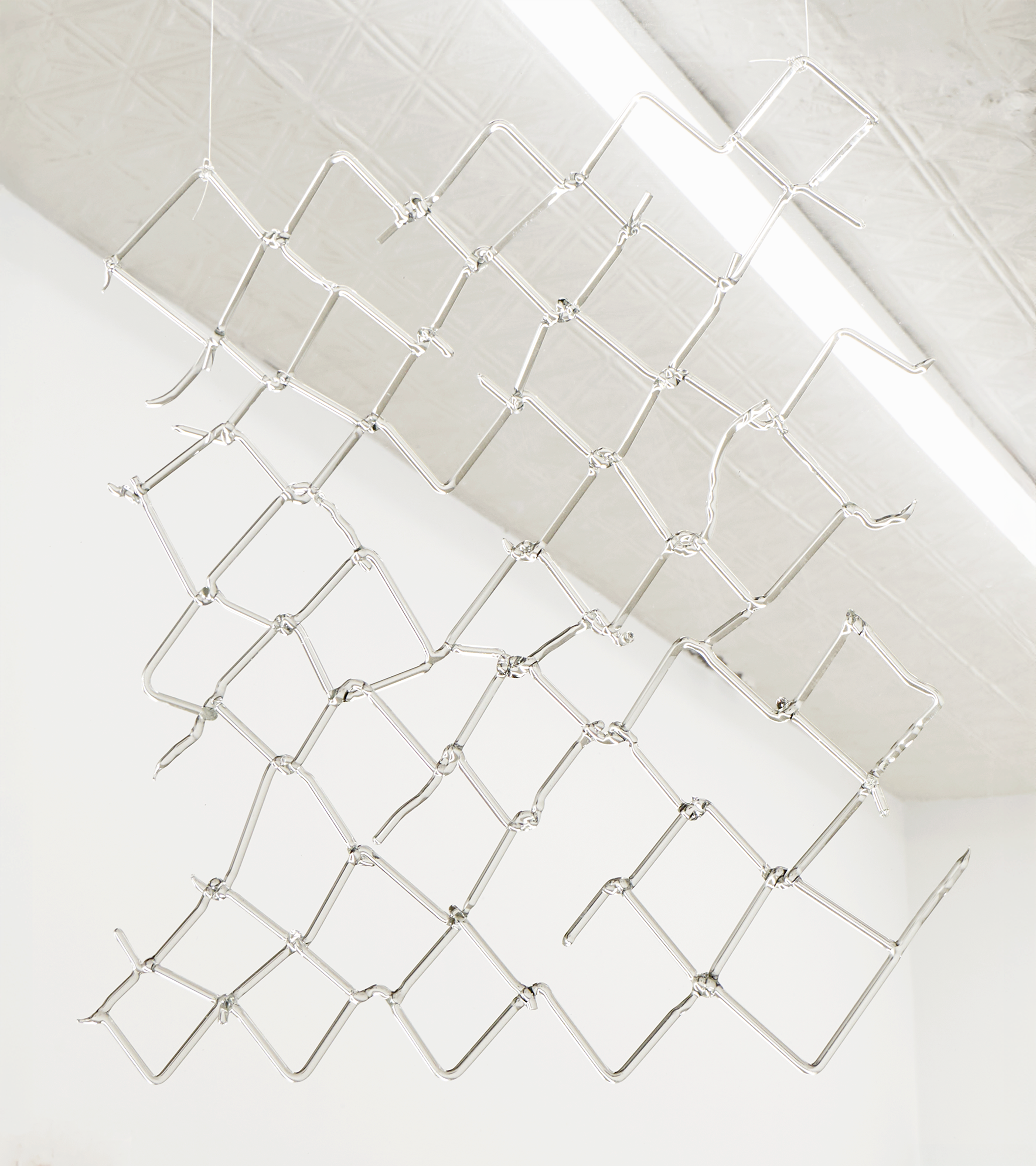
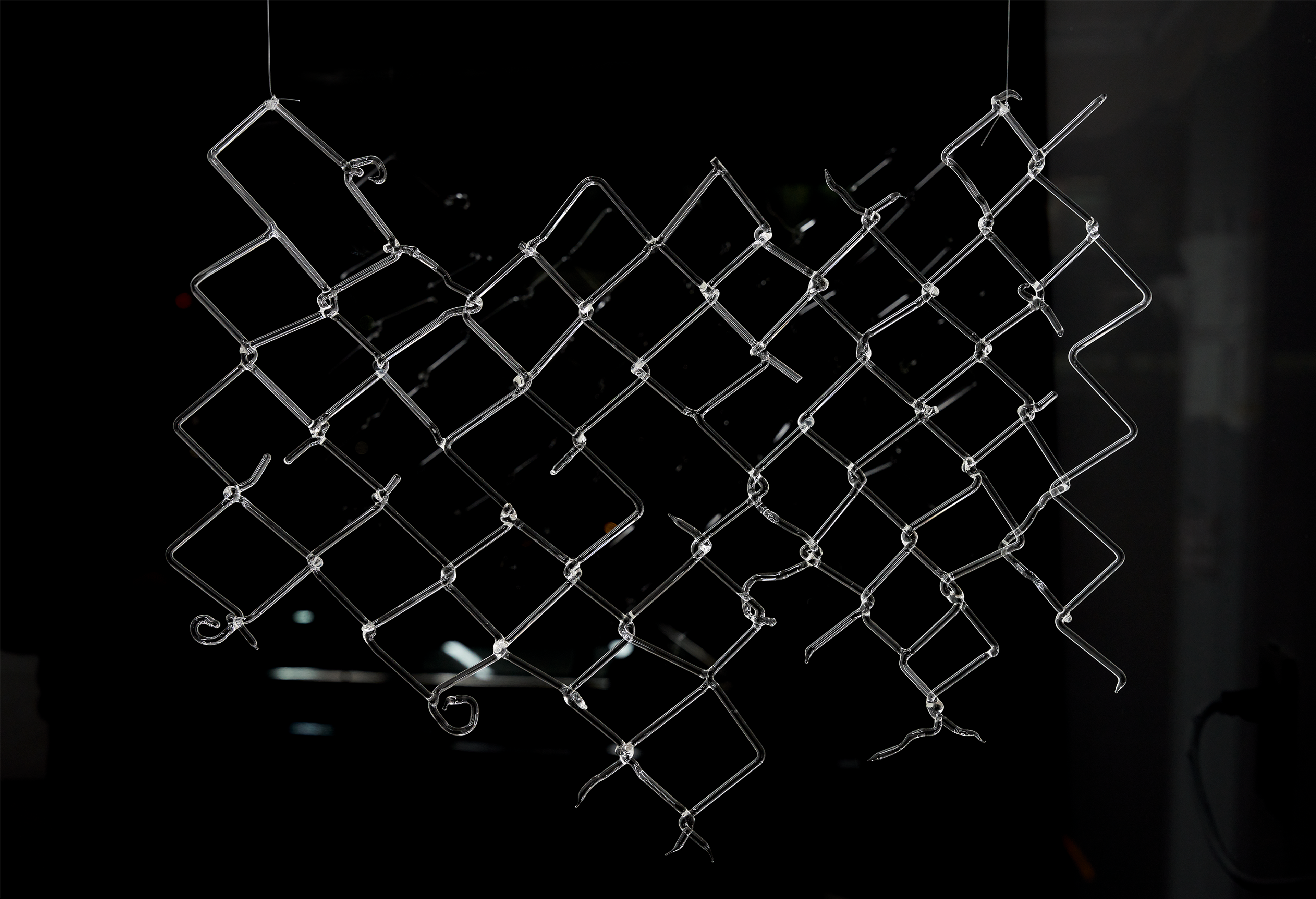
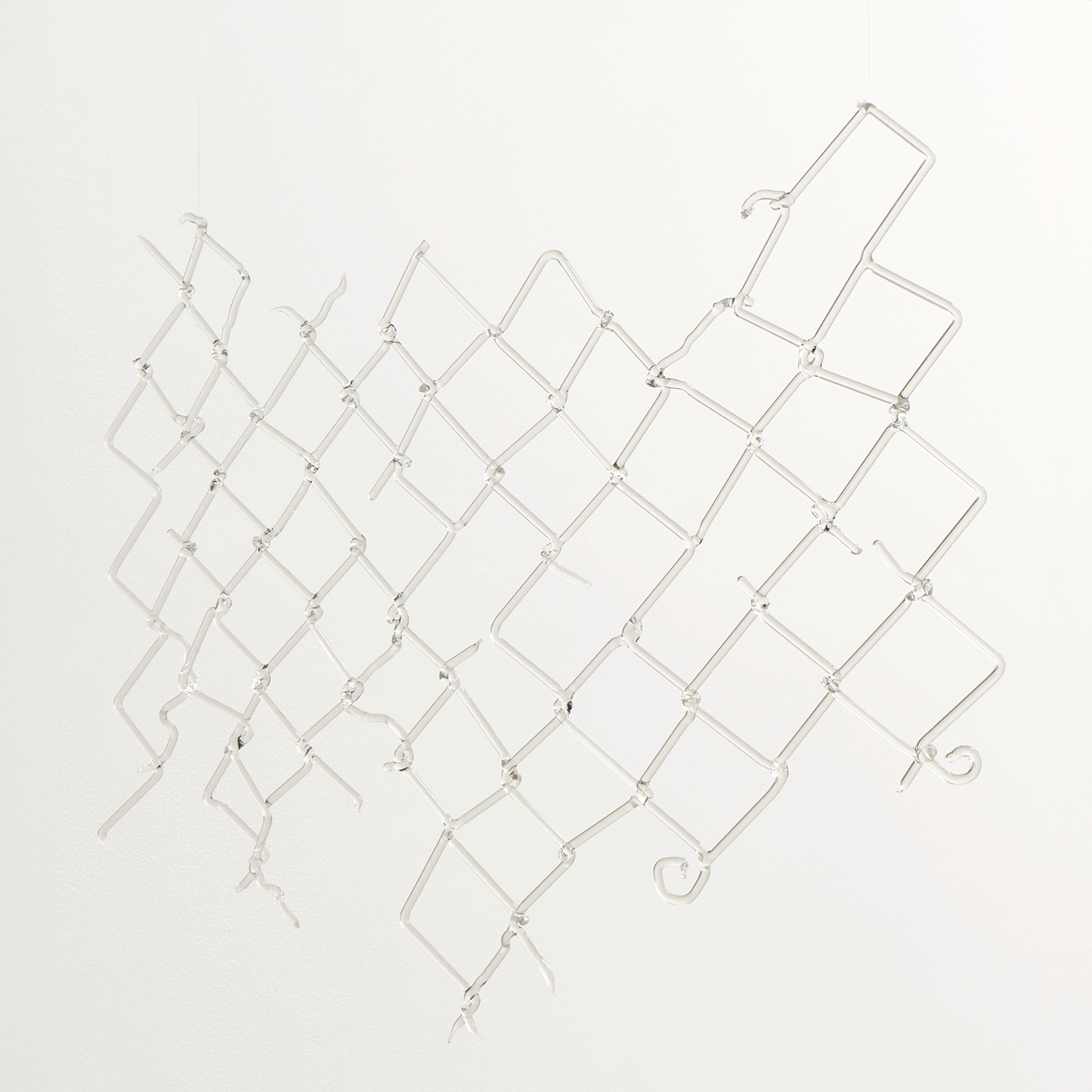
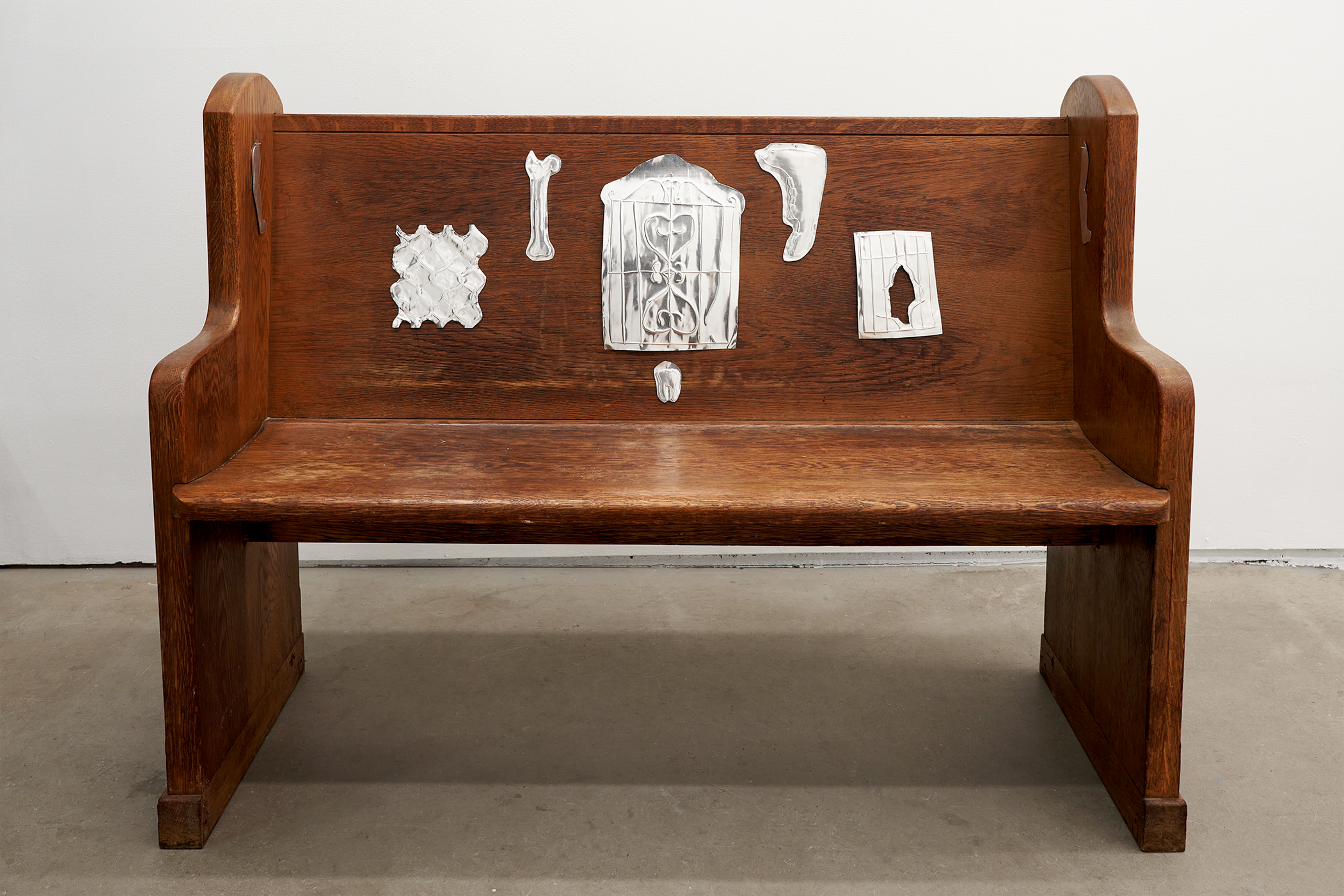
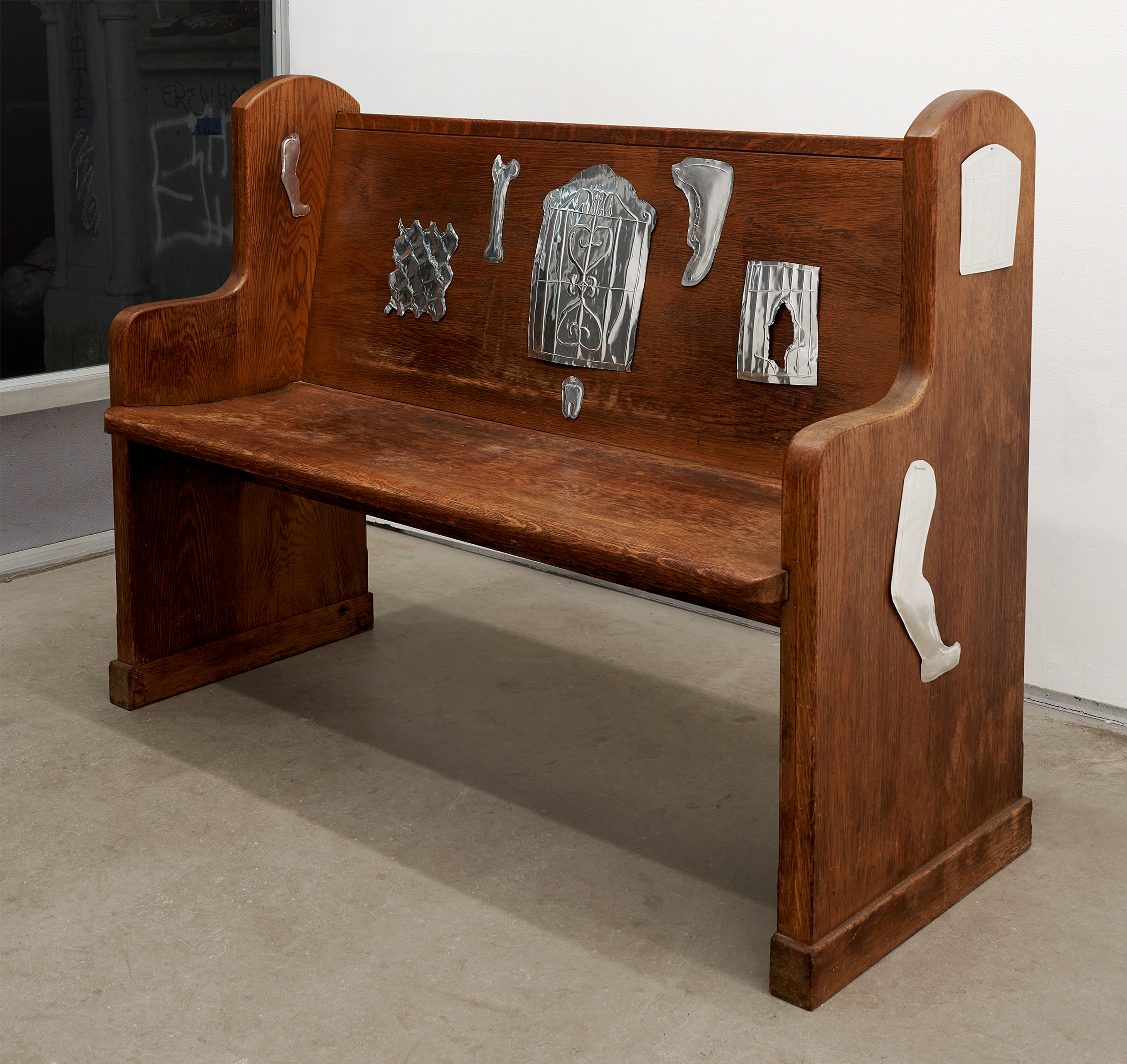
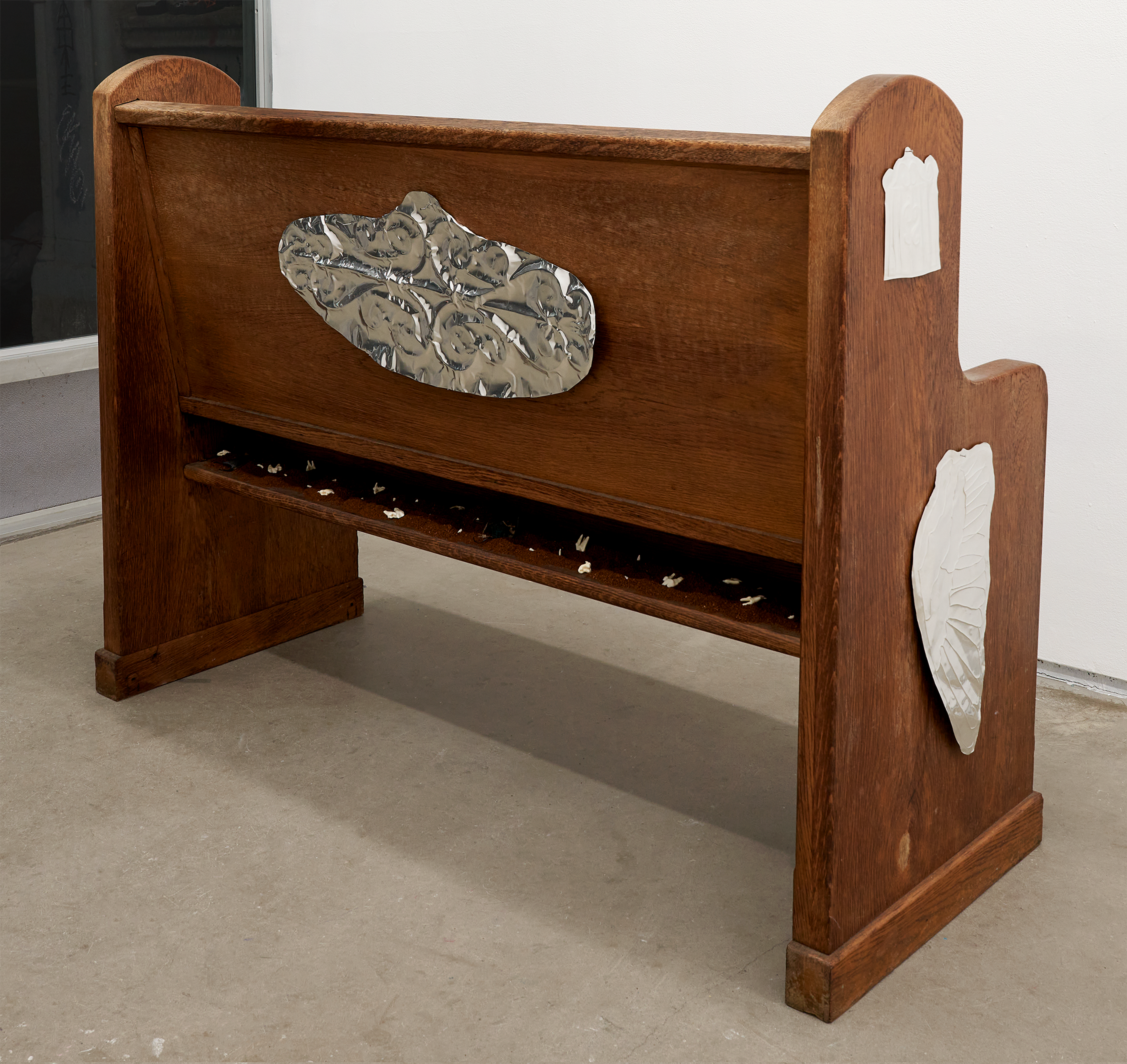
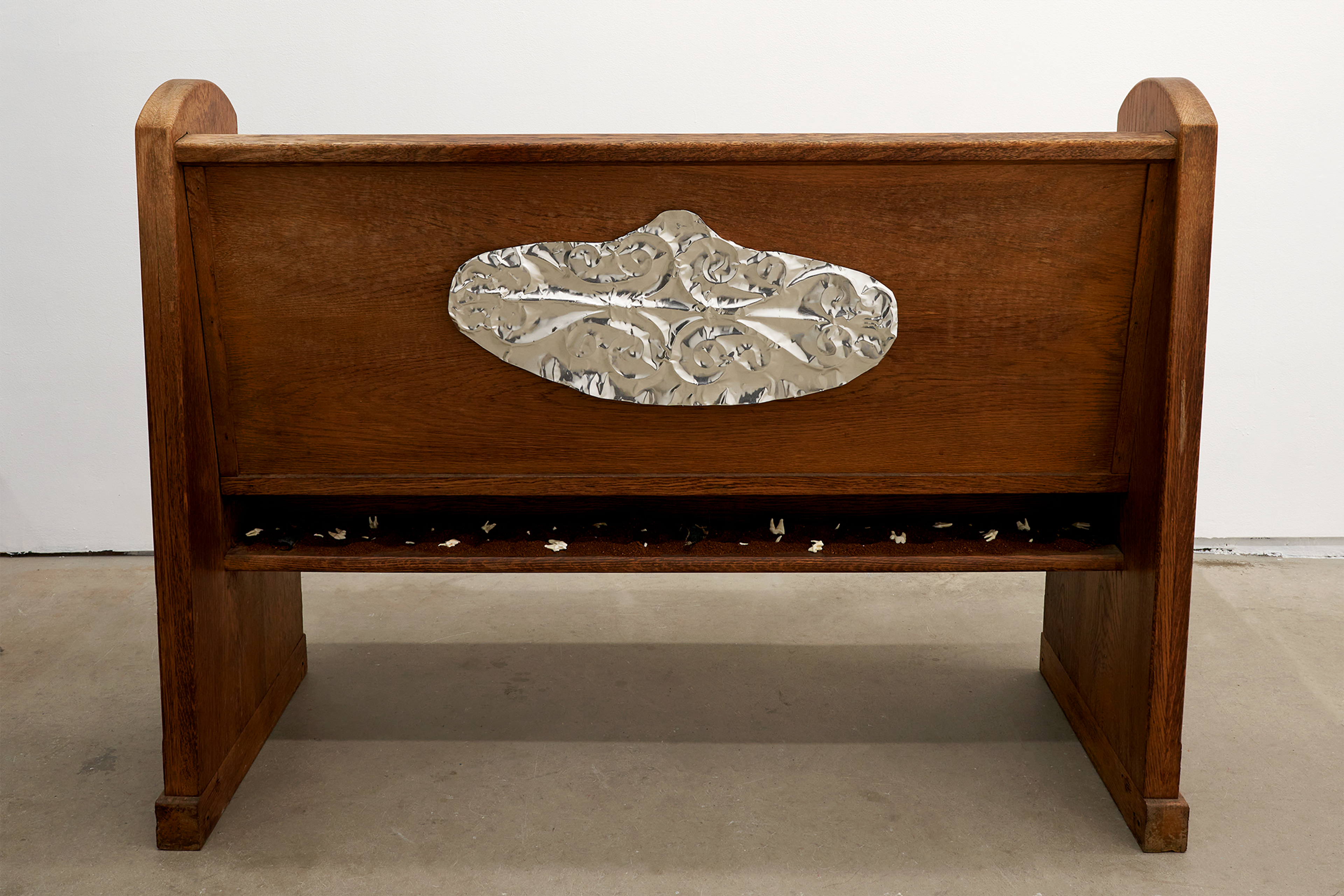
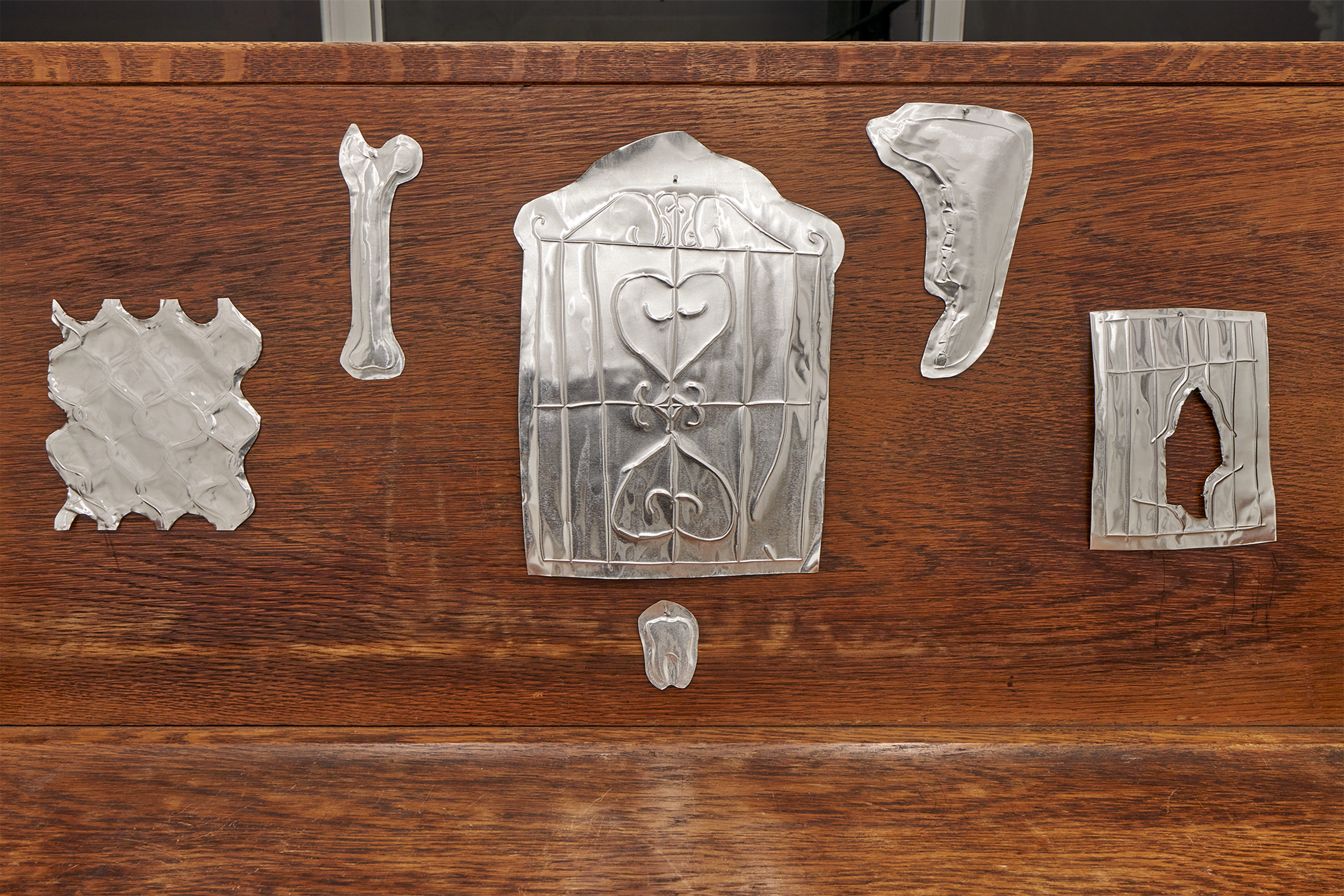
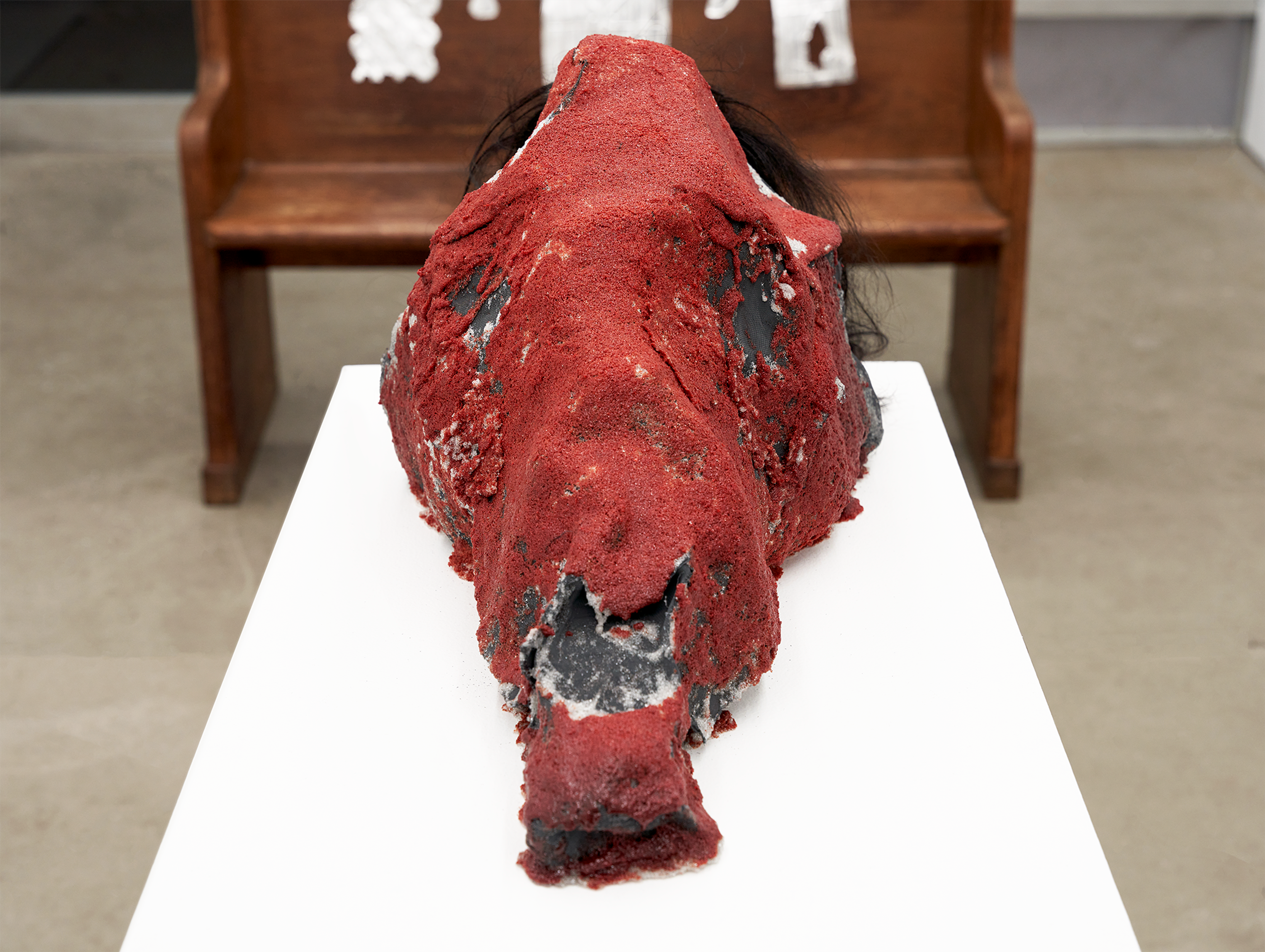
A glass horse skull, La Siguanaba, is the artist’s version of ancestor veneration, looks away from a wooden pew. The pew houses broken bars from the largest maximum-security prison in Latin America, CECOT, a Terrorism Confinement Center based in Tecoluca, El Salvador. It is also adorned with a horse jawbone, coyote femur, and molars. The back panel is an impression of part of a wrought iron gate, single-origin coffee grounds from Sonsonate, El Salvador, embedded coyote teeth, and mermaid purses. Also included are aluminum charms such as a chain-link fence, razor wire, impressions of a gate, coyote bones, and the spirits El Cadejo, El Cipitío, and La Siguanaba. Greenblatt considers the brutality of border politics, escape, the hunting of persons attempting to find shelter, La Matanza, and safety.
Glass is a new medium for the artist, a skill they picked up in the last three years after pursuing a formal education in fiber arts, costume design, and technology. Glass is mutable, fragile yet solid, and capable of behaving like metal or leather in the artist’s hands. Greenblatt’s other medium of choice is sound. Listen carefully: the composition uses homemade glass instruments, samples of a deconstructed Salvadoran 1930s folk song, El Carbonero, and field recordings of water taken in the Pyrenees.
The title of the show references 1932, La Matanza, the crushing of the communist–native Pipil revolt by the totalitarian Salvadoran military regime. It was an intentional attempt to eradicate communism and, in turn, the Nahuat Pipil language through ethnocide. If one was caught representing Indigenous culture in any way—speaking the language or wearing traditional clothing—they were immediately terminated by the state. Despite these efforts, Indigenous people persist in El Salvador today. Greenblatt has elected to omit any use of Pipil and Spanish in the show, focusing instead on things unseen, both living and metaphysical.

ADRIENNE GREENBLATT (b. 1995, Reading, UK) is a multidisciplinary artist, curator, and poet based in Brooklyn, NY. They hold a Bachelor’s degree in Theatre and Dance with a concentration in Costumes from the University of Texas at Austin (2017) and recently completed specialized training in various glass mediums at UrbanGlass in Brooklyn.
Adrienne’s practice is characterized by its multisensory nature and draws strong inspiration from alchemy, the body, metalworking, and esotericism. Using lampworking and kiln-forming techniques, they craft experimental glass forms that appear aqueous and frozen. Their Texan upbringing, mixed Salvadoran-Jewish heritage, and deep interest in the spiritual and natural realms—as well as a fascination with synesthesia, the human body, and illness—profoundly inform their creative work.
Adrienne Greenblatt has performed in spaces such as M. Leblanc in Chicago, KAJE in Brooklyn, Printed Matter St. Marks, Slip House, and Sara’s @ Dunkunsthalle in NYC. Their glasswork has been shown at Weatherproof’s The Hole in Chicago, IL; Espace Maurice in Montréal; Snow Gallery and The Sue Tear in Brooklyn; and Blade Study in NYC. Adrienne has also organized and curated off-site projects and exhibitions at spaces such as No Gallery and GernEnRegalia in NYC, as well as at the beach at Fort Tilden, NY.
WORKS


Adrienne Greenblatt
Eyes with which to see, 2025
21" x 21" x 2"Sandblasted Fused Glass with Frit


Adrienne Greenblatt
Rebirth, 2025
21" x 21" x 2"Sandblasted Fused Glass with Frit


Adrienne Greenblatt
Remembrance, 2025
21" x 21" x 2"Sandblasted Fused Glass with Frit


Adrienne Greenblatt
Lineage, 2025
21" x 21" x 2"Sandblasted Fused Glass with Frit


Adrienne Greenblatt
Ancestral Guidance, 2025
21" x 21" x 2"Sandblasted Fused Glass with Frit


Adrienne Greenblatt
Portal, 2025
21" x 21" x 2"Sandblasted Fused Glass with Frit


Adrienne Greenblatt
Extractivism, or, The Legacy of Empire, 2025
37" x 48" x 20"Antique Oak Pew, Aluminum, Coyote Teeth, Mermaid’s Purse, Ground Single Origin Coffee from Sonsonate, El Salvador


Adrienne Greenblatt
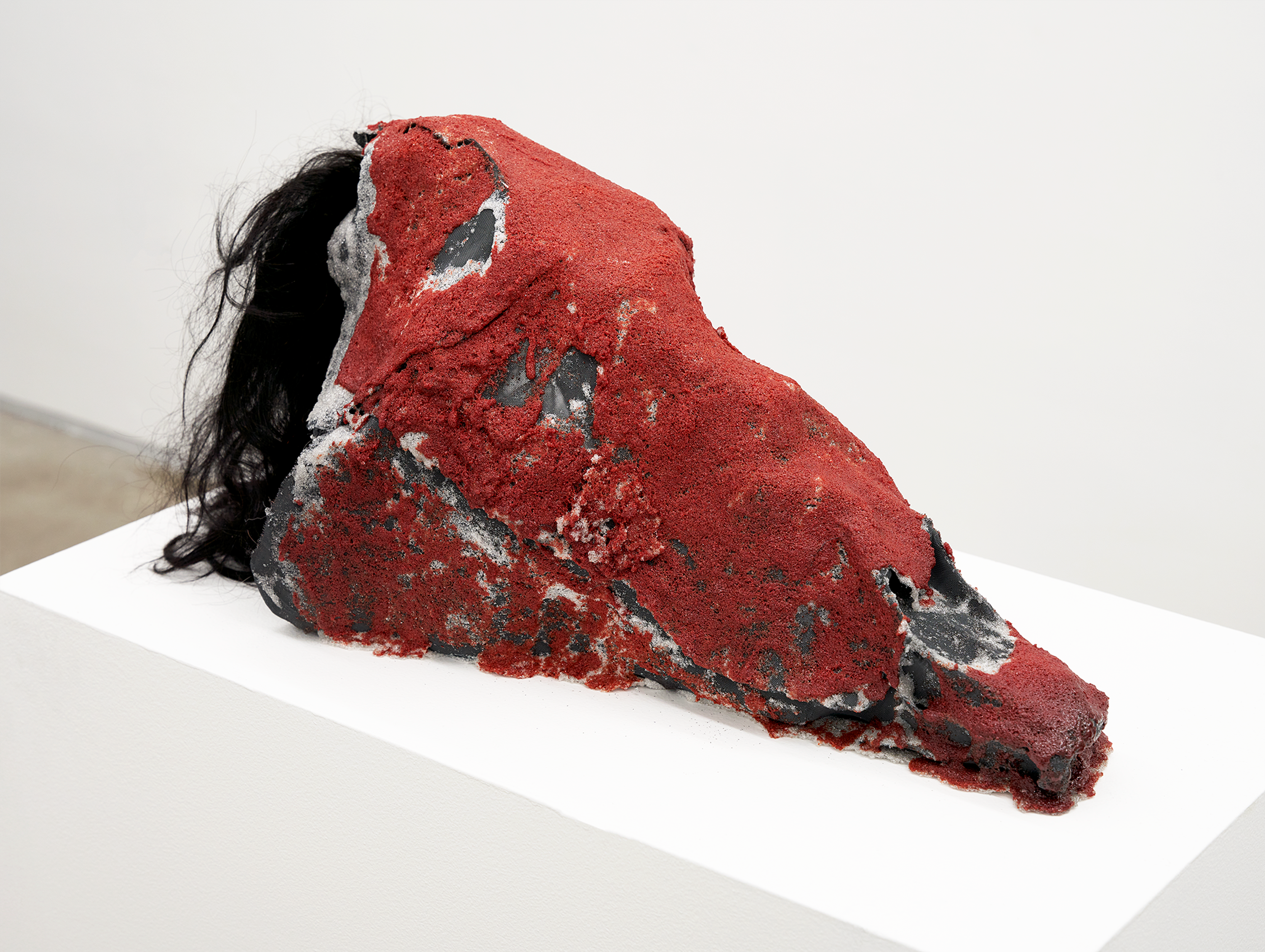
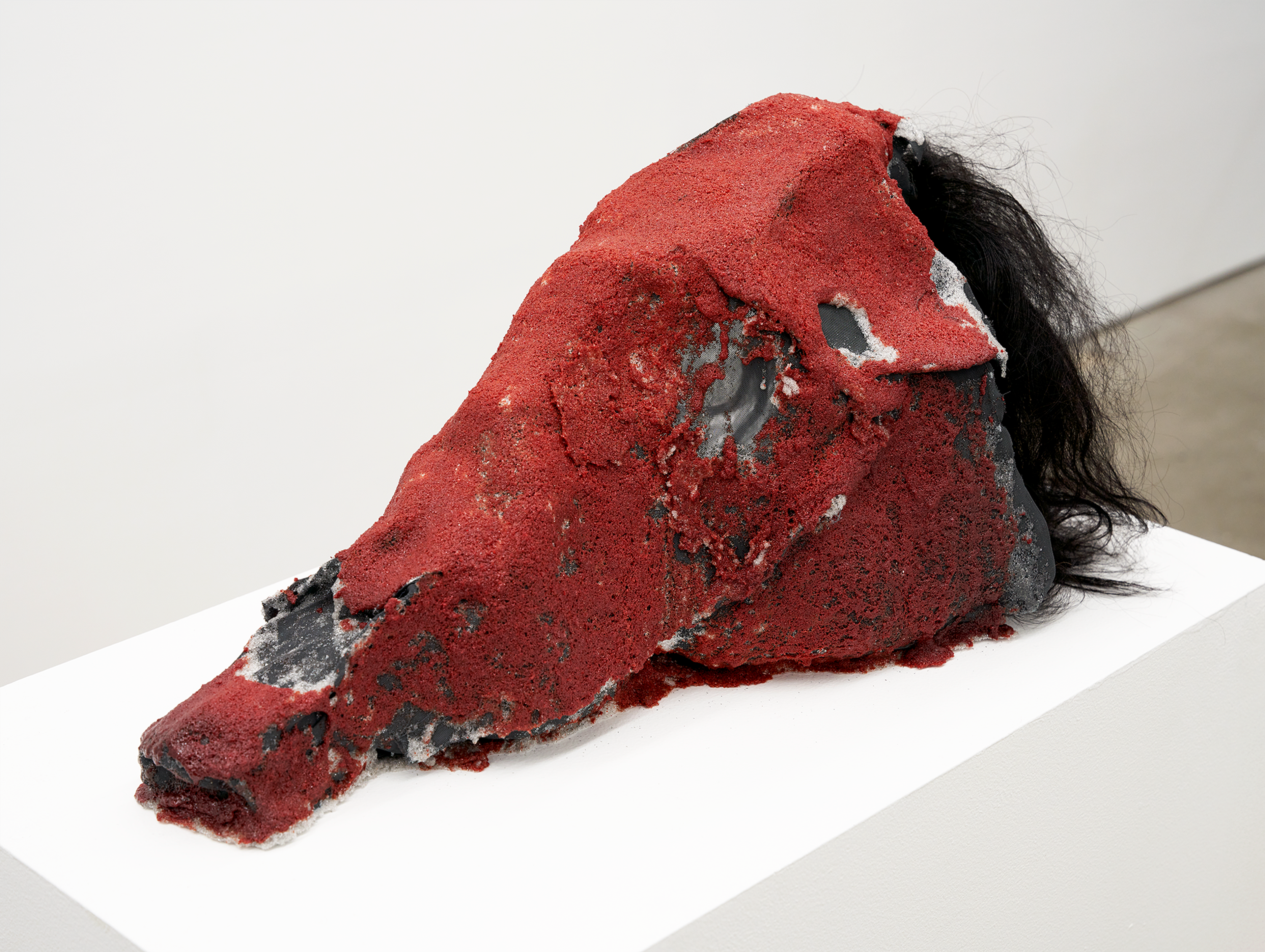
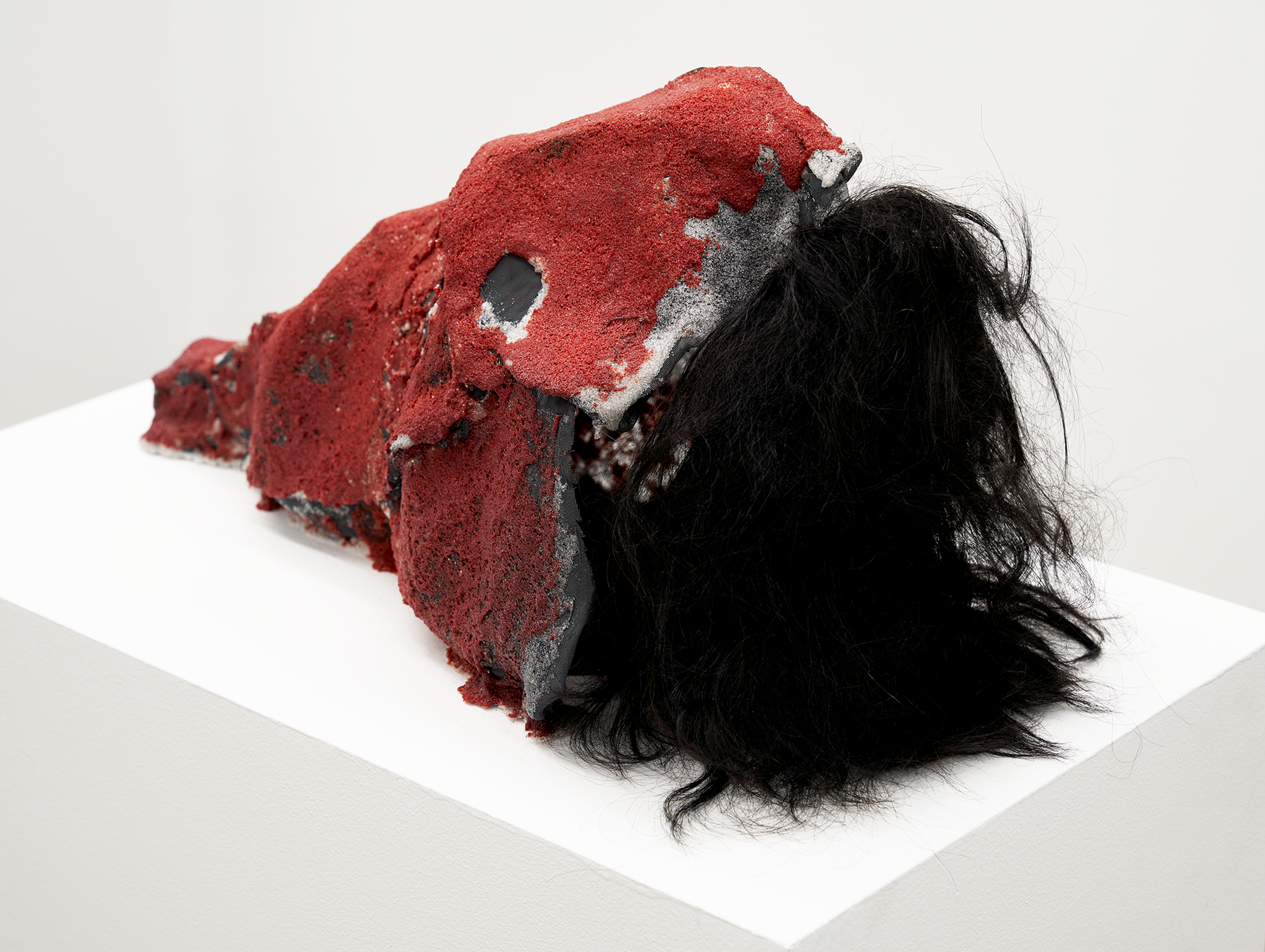
Grandma, 2025
12" x 12" x 22"Glass Frit, Copper Mesh, Grandmama’s Human Hair Clip In Hair Piece

Adrienne Greenblatt
The Veil, 2025
42" x 29" x 12"Sandblasted Borosilicate Glass, Horse Hair, Aluminum Wire, Leather, Aluminum Rod


Adrienne Greenblatt
Absolution, 2025
19" x 16"Borosilicate Glass


Adrienne Greenblatt
Repentance, 2025
15" x 15"Borosilicate Glass